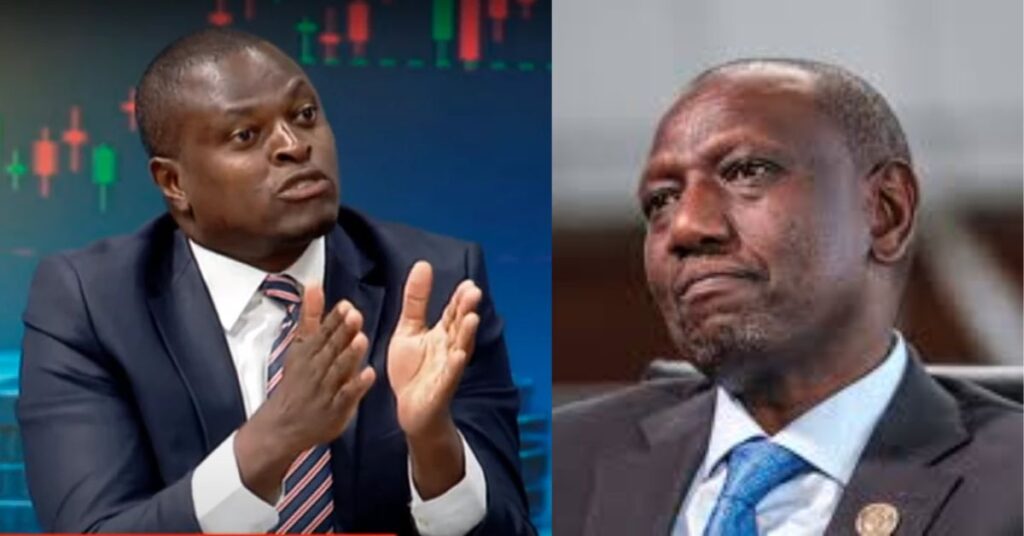
Speaking during the 42nd Annual Seminar Edition II of the Institute of Certified Public Accountants of Kenya (ICPAK) in Mombasa, Nyoro claimed the 60,000-capacity stadium would ultimately cost taxpayers Ksh145 billion, far above the officially reported Ksh45 billion construction budget.
A photo of the progress of construction work inside the Talanta Stadium in Nairobi on Thursday, September 11, 2025
“The economy of Kenya is projected to be around Ksh16.9 trillion. The debt in Kenya is around 12.5 trillion. So when we talk about the debt-to-GDP ratio, we must never massage the denominator. It is over 70 per cent debt-to-GDP ratio,” Nyoro told delegates.
Stadium Financing Concerns
Nyoro alleged that the stadium’s financing plan involves repayments through the Sports Fund, requiring the government to remit Ksh500 million every month for 15 years. He argued that while the initial debt stands at Ksh45 billion, accumulated interest would push the total repayment to Ksh145 billion.
An overhead photo of the progress of construction work at the Talanta Stadium in Nairobi on Thursday, September 11, 2025.
“At the end of 15 years, from a debt of Ksh45 billion, Kenya will pay interest of Ksh100 billion. So the total cost of the Talanta Stadium will be Ksh145 billion,” he said.
“I am not opposed to borrowing. But Kenyans must be told the truth. We cannot continue hiding obligations in off-the-books arrangements while the debt burden grows heavier,” Nyoro added.
Government Position
Despite Nyoro’s claims, the Ministry of Sports has maintained that the Talanta Stadium project is progressing well. Sports Cabinet Secretary Salim Mvurya revealed earlier this week that construction is more than 65 per cent complete.
“External works are expected to be done by December, while the facility is expected to be ready by February 2026,” Mvurya said.
President William Ruto and Kiharu Member of Parliament Ndindi Nyoro.
Nyoro’s remarks come amid growing public debate over Kenya’s debt sustainability. Economists have repeatedly warned that rising debt service costs are crowding out development spending, while political leaders continue to clash over the government’s borrowing strategy.