“The court cannot grant substantive orders at this stage. The petition is scheduled for hearing on March 18, and all parties must be accorded the opportunity to present their case,” Justice Mugambi stated.
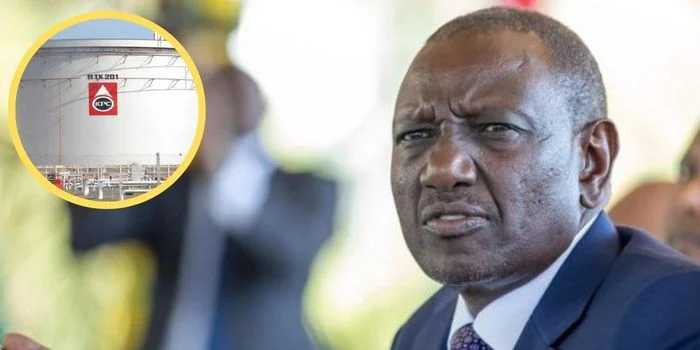
President William Ruto during a meeting with coffee stakeholders at State House Nairobi, March 26, 2025 with an insert of the Kenya Pipeline Company
“This plan is unconstitutional, unlawful, and anti-sovereign. It is not a decision of the people of Kenya, but one driven by external pressure from the International Monetary Fund,” Omtatah claimed in the petition.
Following the latest ruling, Uganda announced on Sunday, February 22, that it had formally signed an agreement to acquire a stake in KPC’s initial public offering (IPO).
Uganda’s Minister of Energy and Mineral Development, Ruth Ssentamu, described the investment as strategic for regional energy cooperation.
“By investing in KPC, a key player in regional petroleum transport and storage, Uganda aims to enhance supply chain stability, ensure reliable and affordable fuel imports, and reinforce its strategic position in East Africa’s evolving energy landscape. This move will strengthen regional energy cooperation and safeguard Uganda’s long-term fuel security,” Ssentamu stated.
Government’s Privatisation Plan
The government intends to offer 65 per cent of KPC’s ordinary shares to the public at Ksh 9 per share, inviting both Kenyan and international investors to participate. The sale is projected to raise approximately Ksh 106 billion, making it one of the largest privatisation efforts in Kenya’s history.