



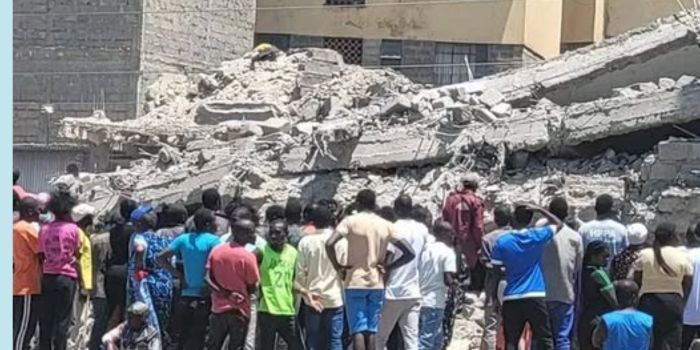
Sakaja Issues New Construction Guidelines After Westlands Building Collapse
Speaking in the aftermath of the disaster, the Nairobi governor directed professional bodies to ensure that any withdrawal of licensed experts from construction sites is formally reported to authorities — a move aimed at closing a long-exploited regulatory loophole.
“We have told the professional bodies to tell their members that if anybody is removed from a site, they must inform the county and that body, so that we can know if a building is going on without the proper professional support,” Sakaja said.
Targeting a Common Loophole
Professional organisations affected by the directive include the Architectural Association of Kenya, the Institution of Surveyors of Kenya, and the Engineers Board of Kenya.
According to Sakaja, eliminating unsupervised construction is essential to protecting public safety in a city experiencing rapid vertical growth.
“Developers enlist qualified professionals to secure approvals, then remove them and continue construction without oversight. That is unacceptable,” he said.
Approval Process Under Scrutiny
The governor also outlined the existing approval framework, emphasising that construction applications must be submitted by licensed architects, engineers, and quantity surveyors who bear legal responsibility for compliance.
These professionals are required to sign indemnity documents committing to uphold safety and quality standards. Project proposals are then evaluated by an urban planning technical committee before final approval is granted.

Officials argue that bypassing professional supervision after approval undermines the entire regulatory system.
Warning of Legal Consequences
Investigators are examining whether proper standards were followed and whether those who signed off on the project fulfilled their obligations.
“Professionals who endorse projects that later fail will be held accountable,” the governor stated, signalling a tougher enforcement stance.
Strengthening Accountability
The policy is also expected to make it easier for inspectors to identify sites operating without authorised technical oversight.
Urban planners say the measure could restore confidence in Nairobi’s construction sector if strictly enforced.
Rising Safety Concerns
The announcement comes amid a series of high-profile building failures in Nairobi, including the recent collapse in Shauri Moyo that resulted in fatalities and injuries.
Rapid urbanisation, demand for housing, and intense competition among developers have placed pressure on regulatory systems, sometimes leading to shortcuts that compromise safety.
Residents, particularly in densely populated neighbourhoods, have increasingly expressed fear over the structural integrity of nearby developments.

Call for Industry Reform
Experts note that successful implementation will depend on cooperation between county authorities, professional regulators, and developers, as well as consistent site inspections.
For Nairobi’s residents, the new rules represent a crucial attempt to prevent further tragedies in a city where the skyline is rising rapidly — but where each new tower now carries heightened scrutiny.
As investigations into recent collapses continue, officials hope the strengthened guidelines will deter negligence, enforce accountability, and ensure that future buildings meet the safety standards required to protect lives.

ALSO READ: Oburu Odinga Dismisses Fake ODM Notice Proposing Babu Owino as Secretary General
Sakaja Issues New Construction Guidelines After Westlands Building Collapse
