


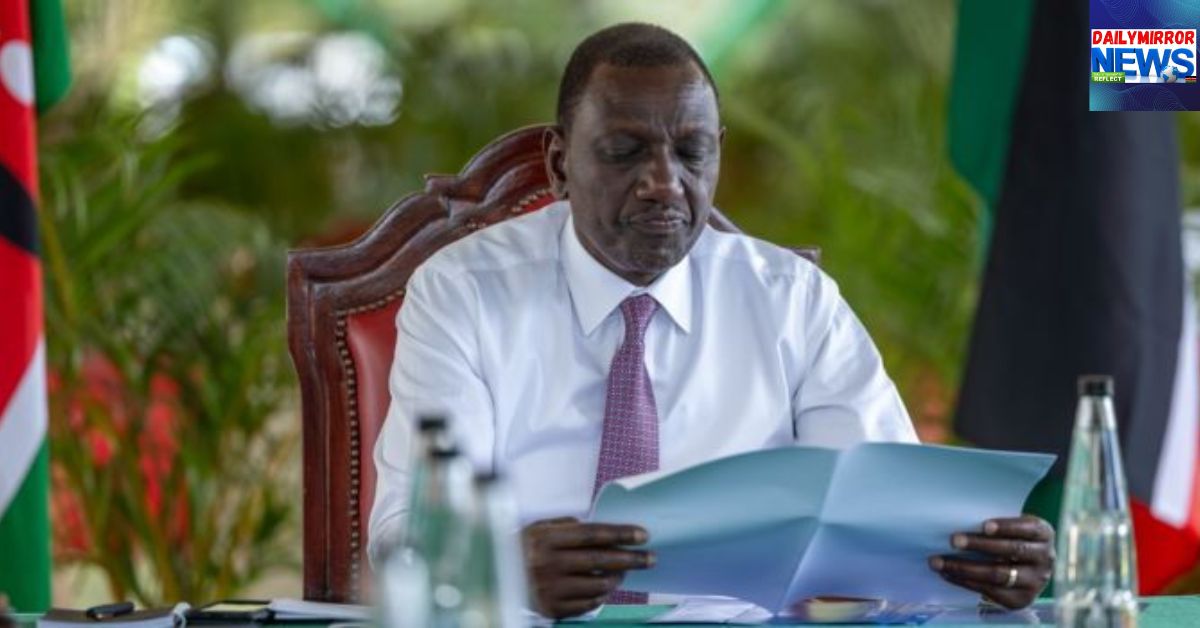
President Ruto Rejects Pensions Bill
In a move that stirred mixed reactions across the political divide, President William Ruto has returned the Pensions Amendment Bill back to Parliament. The decision has sparked fresh debate on the government’s commitment to timely pension reforms and the rule of law.
Speaker of the National Assembly, Moses Wetangula, broke the news on Tuesday, stating that the President withheld assent to the bill due to concerns over two key clauses that risked conflicting with existing laws.
Conflict Over Cabinet Secretary’s Powers
At the center of the standoff is Clause 2, which seeks to empower the Finance Cabinet Secretary to make regulations on pensions. However, President Ruto warned of a looming constitutional conflict.

“Granting the Cabinet Secretary such powers creates a conflict in law that may lead to challenges in the implementation of the regulations,”
the President stated in his memorandum.
This clause directly contradicts Section 3(2) of the Pensions Act, which vests such powers in the President.
Ambiguity on Pension Due Dates
Another issue raised is Clause 3, which aims to define when a pension becomes due. The President faulted the clause for lacking clarity on whether the pension is due at retirement or upon application.
“Such ambiguity risks undermining the legal certainty required for the timely and orderly processing of pension claims,”
the President argued.
Automation Already Addressing Delays
President Ruto also challenged the necessity of the Bill, pointing out that the government has already made major strides in automating pension systems to speed up disbursements.

“The Bill does not take cognisance of the recent digital reforms that have shortened the pension processing timelines and improved service delivery to retirees,”
he added.
Parliament’s Next Move
The President’s memorandum now lies with the Departmental Committee on Finance and National Planning, which must review the objections and report to Parliament within 21 days.
The committee will consult stakeholders and recommend whether to accept the President’s changes or challenge them. The latter would require a two-thirds majority vote in the National Assembly to override the President’s veto.

The Pensions Amendment Bill had been passed on August 7, 2022, and presented for assent. Now, with its fate hanging in the balance, thousands of public servants awaiting retirement are left watching anxiously as politics and policy clash once again.
ALSO READ: Fresh Storm Hits Boda Boda Sector as Parliament Backs Tough Parliament
President Ruto Rejects Pensions Bill
