


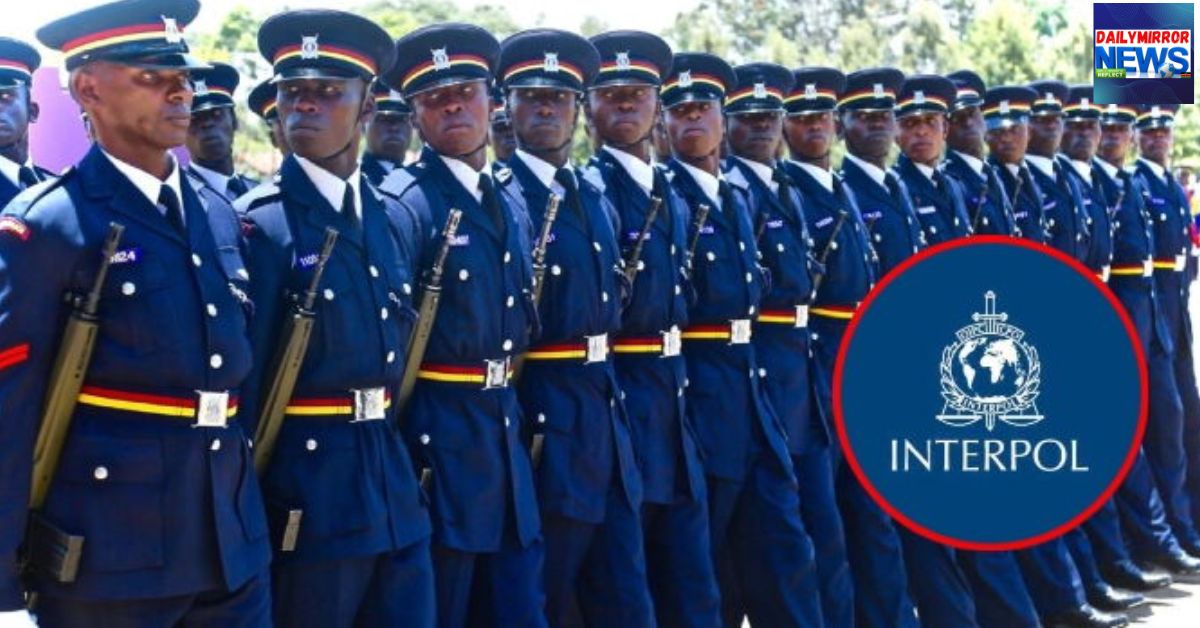
NPS Launches Permanent INTERPOL Curriculum for Police to Combat Transnational Crime
The new training programme, known as the INTERPOL Policing Capabilities Foundation Course Module, was officially announced on March 5 and will focus on strengthening officers’ ability to use international policing databases, secure communication systems and investigative tools used by law enforcement agencies across the world.
Inspector General Douglas Kanja said the initiative comes at a time when criminal activities are increasingly crossing national borders, making international collaboration essential in modern policing.

“We live in an era where crime has no respect for borders or territorial boundaries. Criminals exploit the gaps between law enforcement agencies, the gaps between national crime databases, and the gaps in our knowledge of how to use international policing tools,” Kanja said during the launch.
He explained that the new curriculum will help bridge those gaps by providing officers with practical knowledge on how to effectively utilise INTERPOL’s systems and investigative capabilities.
The training programme will equip Kenyan police officers with hands-on skills to access global criminal databases, analyse international crime data and coordinate investigations involving suspects operating across multiple jurisdictions.
Authorities said the course will also prepare officers to respond to complex crimes such as human trafficking, cybercrime, and sexual and gender-based violence, which often involve networks that operate across national borders.
Director of the Directorate of Criminal Investigations, Mohamed Amin, who attended the launch, emphasised that integrating the programme permanently into Kenya’s police training framework will help build sustainable investigative capacity within the country’s security agencies.
“This curriculum launch reflects Kenya’s long-term vision for modern policing. As crime evolves and crosses borders, we must ensure officers are prepared to collaborate regionally and internationally confidently,” Amin said.
Participants enrolled in the course will undergo practical training through case studies, group discussions, simulations and field exercises designed to mirror real-life policing situations. The programme aims to ensure officers are able to confidently apply INTERPOL tools in daily law enforcement duties as well as in complex international investigations.

The course was developed with both technical and financial support from INTERPOL’s Project Soteria, an initiative funded by the Foreign, Commonwealth and Development Office to strengthen international cooperation against organised crime and emerging global security threats.
Speaking during the launch event, INTERPOL Director David Caunter praised Kenyan law enforcement agencies for their commitment to strengthening international cooperation in tackling cross-border crime.
“The course builds on the strong commitment and capability of Kenya’s law enforcement officers in addressing cross-border crime and strengthening international cooperation against organised criminal networks,” Caunter said.
Through its systems, the organisation issues international alerts known as Red Notices to help locate wanted suspects worldwide. It also provides secure communication channels, forensic analysis support and operational data-sharing tools to assist national police agencies in investigating complex crimes.
INTERPOL’s global operations focus on a wide range of criminal activities including cybercrime, organised crime, counter-terrorism and environmental crime. Investigators working through the network frequently collaborate on cases involving fraud, phishing, drug trafficking, wildlife crime, illegal fishing and human trafficking.
For Kenya, the introduction of the permanent INTERPOL training curriculum signals a broader push to modernise policing and strengthen the country’s ability to tackle increasingly sophisticated criminal networks operating across borders.

Security officials say the programme will ensure Kenyan officers remain connected to global crime-fighting systems as criminals continue to exploit technology, international travel and weak coordination between jurisdictions to evade arrest.
ALSO READ: Duale Hits Back at Teachers, Says 249,000 Have Already Used SHA
NPS Launches Permanent INTERPOL Curriculum for Police to Combat Transnational Crime
