



CS Wandayi Says VAT Cut and Subsidy Stopped Fuel Prices From Reaching Ksh260
Energy and Petroleum Cabinet Secretary Opiyo Wandayi has defended recent government interventions in the fuel sector, stating that without decisive action, pump prices in Kenya could have surged beyond Ksh260 per litre, significantly worsening the cost-of-living crisis.
Speaking on Saturday, April 18, Wandayi explained that a combination of tax relief measures and subsidies played a critical role in cushioning consumers from sharp global price shocks linked to geopolitical tensions.
“In a span of one month, the prices of petrol, diesel, and kerosene went up by 42 per cent, 69 per cent, and 105 per cent respectively, and therefore it was critical that the government, under the directive of the President, took the measures it took,” Wandayi said, highlighting the urgency that informed the policy decisions.
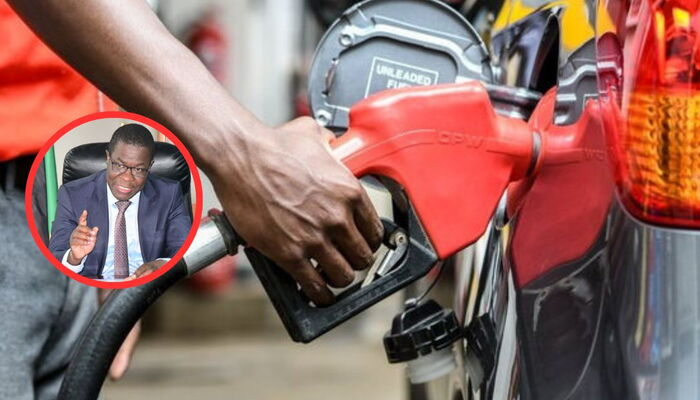
The CS pointed to the government’s move to reduce Value Added Tax (VAT) on petroleum products—initially from 16 per cent to 13 per cent and later to 8 per cent—as a key intervention aimed at protecting households and businesses from escalating fuel costs.
He further defended the use of a Ksh6.2 billion fuel subsidy drawn from the Petroleum Development Levy, noting that it helped stabilise pump prices at a time when international oil markets were experiencing volatility.
“If those two actions were not taken, the price of super petrol would have been Ksh217 per litre, diesel Ksh236, and kerosene Ksh261,” he added, warning that kerosene users, largely low-income households, would have been the hardest hit.
Data from the Energy and Petroleum Regulatory Authority (EPRA) shows that in its April 14 pricing review, fuel costs had initially risen sharply. Super petrol increased by Ksh28.69 per litre, while diesel rose by Ksh40.30, pushing prices in Nairobi to Ksh206.97 and Ksh206.84 respectively.
The steep increase triggered widespread concern among consumers and transport operators, who warned of a ripple effect on the prices of goods and services across the economy.
However, following the VAT adjustment, EPRA revised the prices downward, cutting Ksh9.37 per litre on petrol and Ksh10.21 on diesel. Kerosene prices remained unchanged.

As a result, current retail prices in Nairobi stand at Ksh197.60 per litre for petrol, Ksh196.63 for diesel, and Ksh152.78 for kerosene, offering some relief to consumers after days of uncertainty.
Wandayi attributed the global surge in fuel prices to ongoing geopolitical tensions, particularly in the Middle East, which have disrupted supply chains and driven up landed costs of petroleum products.
“The volatility we are witnessing is largely external, but we are taking deliberate steps to shield Kenyans from its full impact,” he said, emphasising the government’s commitment to stabilising the sector.
According to Kinyua, the government has entered into framework agreements with international suppliers to guarantee consistent fuel availability, even during disruptions in key global shipping corridors.
“We are diversifying sourcing beyond traditional markets to include Europe and the Far East while enhancing use of alternative routes such as the Red Sea,” he noted, outlining efforts to strengthen supply resilience.
The latest developments come at a time when fuel prices remain a central concern for Kenyans, with any fluctuation having a direct impact on transport, food prices, and overall inflation.
While the recent adjustments have provided temporary relief, analysts warn that sustained stability will depend on global market trends and the government’s ability to maintain a delicate balance between taxation, subsidies, and fiscal sustainability.

ALSO READ: Pressure Mounts on Police After 25-Year-Old Man Dies in Malindi Police Cell
CS Wandayi Says VAT Cut and Subsidy Stopped Fuel Prices From Reaching Ksh260
