


Murkomen Claims Teargas Used at Opposition Rallies May Not Be From Police
Nairobi, Kenya – Interior Cabinet Secretary Kipchumba Murkomen has suggested that teargas used during recent opposition rallies may not have originated from the police, raising questions about how the canisters ended up in civilian hands.
Speaking during a security briefing in the North Rift region on Thursday, February 19, Murkomen said investigations were underway to establish the source of the teargas, noting that some incidents had occurred in areas where police were not present.

“It is possible that we have tear gas canisters in the wrong hands because, in some instances, even where police presence was not, we’ve seen teargas has been used in rallies,” Murkomen stated.
Investigations Launched
Murkomen explained that the Inspector General of Police had initiated inquiries to determine whether civilians had access to teargas canisters and whether there was collusion involving security officers. He added that some of the canisters used appeared to be those that had failed to detonate when previously deployed by police.
“I can tell you for sure it is not police officers who are using those teargas, and they are not used under the command and the direction of the police officers who are in command,” he said.
Murkomen further suggested that another party may be distributing the canisters illegally, fueling unrest at opposition gatherings.
Witima ACK Church Attack
The remarks come in the wake of the January 25, 2026, Witima ACK Church attack in Othaya, Nyeri, where armed individuals stormed a service attended by former Deputy President Rigathi Gachagua and several opposition leaders. Witnesses reported that the attackers, some wearing hoods, fired live rounds into the air and lobbed teargas canisters directly into the sanctuary.
The chemical fumes triggered panic among congregants, including infants and the elderly, leading to a stampede. Gachagua’s personal vehicle was set ablaze, and several cars in his motorcade were destroyed.
Opposition leaders have described the incident as a state-sponsored assassination attempt, while government officials countered that the violence was orchestrated by the opposition itself to gain political sympathy.
Pattern of Disruptions
Earlier this month, a rally in Embu led by Wiper Party leader Kalonzo Musyoka was dispersed by police using teargas, citing “security concerns” and unauthorized assembly. In Mombasa, a consultative forum was broken up by anti-riot police deploying water cannons and teargas, resulting in injuries and a prolonged standoff.
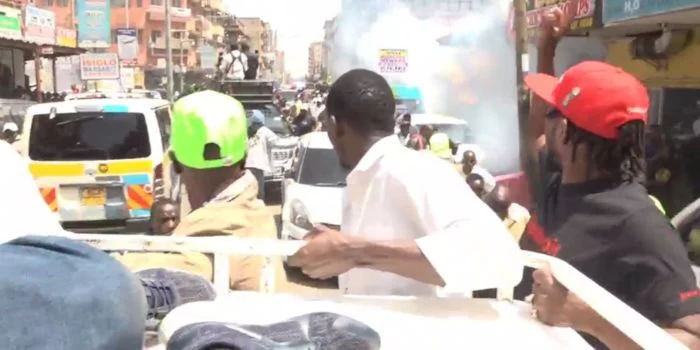
In Kitengela, Nairobi Senator Edwin Sifuna’s rally on the rising cost of living was also targeted. Police fired volleys of teargas, forcing Sifuna and supporters to seek shelter in nearby shops as smoke engulfed the town center, temporarily shutting down businesses along the Namanga Highway.
Broader Implications
Murkomen’s comments highlight the deepening mistrust between the government and the opposition over security operations. Analysts warn that the uncertainty surrounding the source of teargas canisters could further inflame tensions, especially as opposition leaders accuse the police of complicity in attacks.
The investigations announced by the Interior Ministry are expected to shed light on whether rogue elements or external actors are fueling the chaos.

Conclusion
As political rallies continue across the country, Murkomen’s assertion that teargas may be in civilian hands adds a new dimension to the debate over accountability and security. With opposition leaders vowing to press on with their meetings and the government promising investigations, the coming weeks will test Kenya’s ability to balance political freedoms with public safety.
ALSO READ: Gachagua, Kalonzo Team to Sue 12 Police Officers, 2 MPs Over Witima ACK Church Attack
Murkomen Claims Teargas Used at Opposition Rallies May Not Be From Police
