



KDF Officer Sentenced to 7 Years for Rhino Horn Trafficking in Homa Bay
A court in Homa Bay County has sentenced a Kenya Defence Forces (KDF) officer and two accomplices to seven years in prison each after they were found guilty of dealing in an illegal wildlife trophy, in a case that authorities say highlights the continued threat of wildlife trafficking in Kenya.
According to court proceedings, the suspects were arrested following a coordinated crackdown by security agencies after members of the public tipped off authorities about suspected illegal wildlife trade activities in the area.
Investigators from the Directorate of Criminal Investigations (DCI), working jointly with officers from the Kenya Wildlife Service (KWS) and regular police units, launched the operation that eventually led to the arrest of the three suspects.

Prosecutors told the court that the suspects had allegedly been planning to sell the wildlife trophy when detectives stormed the premises where they were staying and recovered the rhino horn.
The trio was subsequently charged under provisions of the Wildlife Conservation and Management Act, facing two separate counts relating to dealing in and possession of a wildlife trophy.
Delivering the ruling, Christine Auka found the three guilty of the offences and issued custodial sentences on the first count.
<u>“On the first count of dealing in a wildlife trophy, each of the accused is hereby sentenced to serve seven years in prison,”</u> Magistrate Auka ruled during the sentencing.
In addition to the prison term, the court imposed a financial penalty on the second count of unlawful possession of a wildlife trophy.
<u>“On the second count of possession of a wildlife trophy, the court imposes a fine of Ksh3 million for each of the accused, with a default sentence of five years in prison should the fine not be paid,”</u> the magistrate ordered.
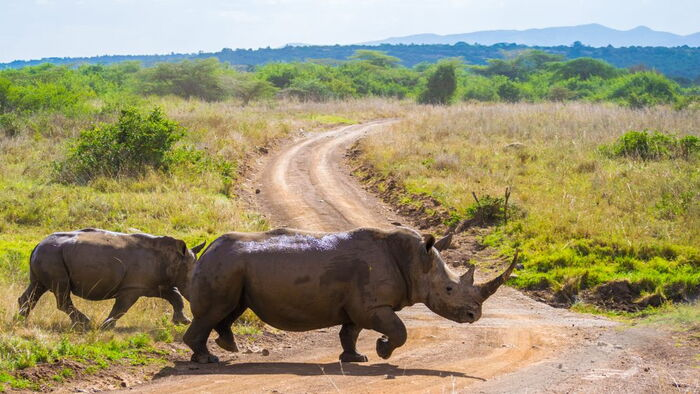
Authorities said the recovered rhino horn weighed approximately 2.9 kilograms, a size that could fetch millions of shillings on the illegal wildlife market, where rhino horns remain highly sought after for black-market trade, particularly in parts of Asia.
Investigators also seized a Toyota Kluger believed to have been used by the suspects to transport the illegal wildlife trophy during their operation.
The court ordered the registered owner of the vehicle to appear before it on March 18 to explain why the vehicle should not be forfeited to the state as part of the evidence linked to the crime.
According to investigators, the suspects had been staying at a hotel in Rodi Kopany when security officers conducted the raid that resulted in their arrest.
Detectives believe the rhino horn may have originated from Ruma National Park, a protected wildlife reserve located within the same county that is known for its population of rare wildlife species.
Wildlife trafficking remains one of the major threats to endangered species in Kenya, despite intensified efforts by authorities to dismantle illegal wildlife trade networks.
The conviction, authorities say, sends a strong message that individuals involved in wildlife crimes—including those serving in government institutions—will face serious legal consequences.

Conservationists have welcomed the ruling, noting that stronger enforcement and stiff penalties are essential in protecting Kenya’s endangered wildlife and preserving the country’s natural heritage for future generations.
ALSO READ: Junet Mohamed Laughs Off Kalonzo’s Decision To Reshuffle Azimio Leadership, Shares Old Meme
KDF Officer Sentenced to 7 Years for Rhino Horn Trafficking in Homa Bay
