



Musalia Mudavadi Rules Out Relocating Kenya’s Capital from Nairobi
Appearing before the Senate Committee on Devolution and Intergovernmental Relations on Monday, March 30, Mudavadi told lawmakers that while other countries have successfully moved their capitals, Kenya’s unique land ownership framework presents significant obstacles.
“We cannot relocate the capital to another city. In Tanzania they were able to do that with Dodoma and in Nigeria they moved away from Lagos. Our land tenure system cannot provide a solution like the one in Tanzania and Nigeria,” Mudavadi stated.
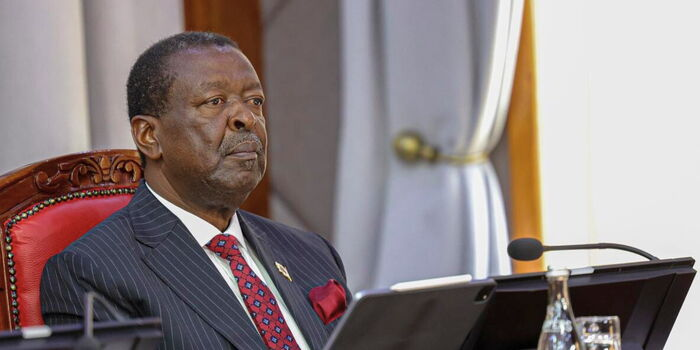
Mudavadi acknowledged that countries such as Tanzania and Nigeria successfully relocated their capitals to Dodoma and Abuja respectively, but emphasised that Kenya’s circumstances are markedly different due to the prevalence of private land ownership in urban areas.
“A lot of the land in urban areas belongs to Kenyan citizens. Even if you move beyond that, you would be looking at compromising people’s land to create a new city,” he explained.
According to Mudavadi, acquiring vast tracts of land for a new capital would likely trigger complex legal battles and compensation demands, making the process both costly and politically sensitive.
He also pointed to the enormous financial implications of relocating critical infrastructure, including transport systems such as the Standard Gauge Railway (SGR), government institutions, and public utilities.

Instead of pursuing relocation, Mudavadi urged policymakers to focus on improving Nairobi’s existing infrastructure and governance systems. He highlighted an ongoing cooperation agreement between the national government and the Nairobi County Government aimed at transforming service delivery in the capital.
The Ksh80 billion initiative targets key sectors including water and sewerage, road and bridge construction, drainage systems, housing development, and solid waste management, as well as the regeneration of the Nairobi River.
“The joint steering committee which I chair is not the implementing committee. Implementation is led by Governor Sakaja through a hands-on committee that works closely with technical teams from both the national government and City Hall,” Mudavadi clarified.
The cooperation framework is part of broader efforts to address Nairobi’s rapid urbanisation and infrastructure strain, which have been exacerbated by population growth and unplanned development.
Mudavadi’s remarks are likely to shape ongoing policy discussions around urban planning and national development, particularly as Kenya grapples with balancing growth and sustainability in its major cities.

ALSO READ: Nairobi Governor Johnson Sakaja Targeted for Arrest as Police Camp at City Hall
Musalia Mudavadi Rules Out Relocating Kenya’s Capital from Nairobi
