


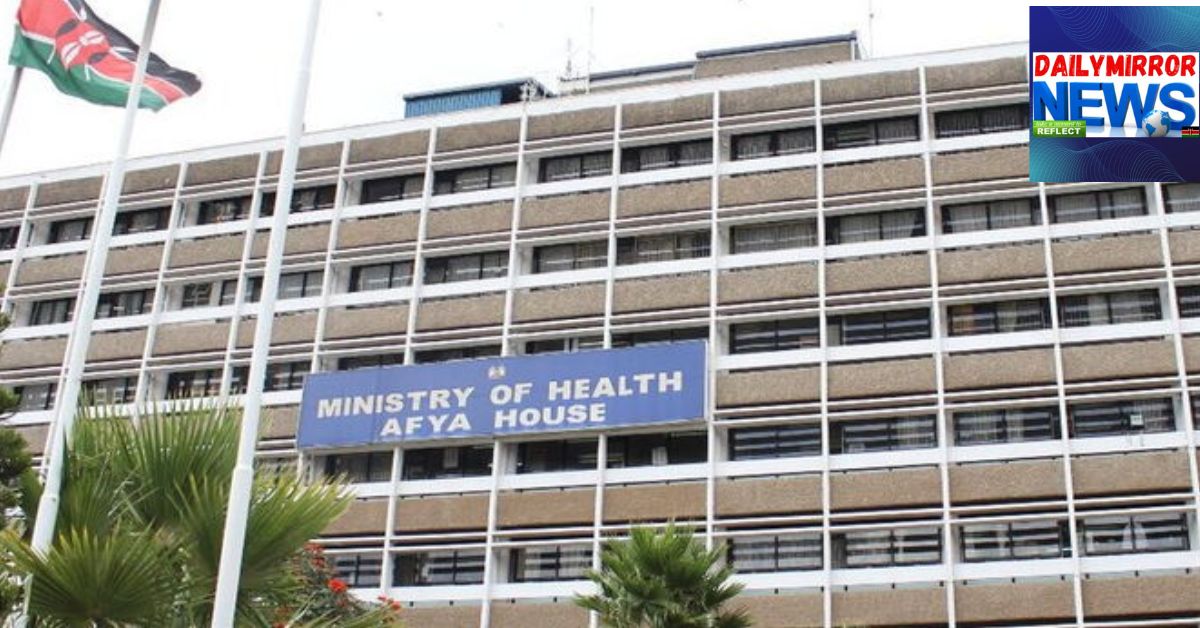
Ministry of Health Confirms 59 Suspected Ebola Cases in Kenya Tested Negative
The Ministry of Health has moved to reassure Kenyans over the country’s Ebola preparedness after confirming that all 59 individuals who had been flagged as suspected Ebola cases have tested negative for the deadly virus.
The announcement was made by Principal Secretary for Health Mary Muthoni during an inspection tour at the Busia-Malaba border on June 6, where health authorities are intensifying surveillance measures amid growing concerns over the spread of Ebola in neighboring Uganda.
The confirmation comes as Kenya remains on high alert following reported Ebola infections across the border, prompting the government to strengthen screening systems at major entry points and prepare emergency response mechanisms in the event of an outbreak.
Addressing health officials and border management teams, Muthoni emphasized that while the test results were encouraging, authorities would continue maintaining strict surveillance and preparedness measures.

“We have confirmed that 59 individuals suspected of carrying Ebola have all tested negative, which is reassuring, but we are not letting our guard down,” Muthoni stated.
According to government statistics, between 1,500 and 2,000 travellers pass through Malaba daily, while approximately 300 cargo trucks enter Kenya through the border point every day.
Health experts consider such heavy movement a potential challenge in disease surveillance, especially during outbreaks involving highly infectious diseases such as Ebola.
“Malaba remains one of our busiest entry points and therefore one of the most critical areas for surveillance. The volume of travellers and cargo traffic requires constant vigilance,” Muthoni said.
Health officers are currently working alongside immigration, customs, and security agencies to ensure that every traveller entering Kenya undergoes mandatory health screening.

However, the PS expressed concern over reports that some travellers have been reluctant to cooperate with health officials during the screening exercise.
“We urge all travellers to cooperate fully with health teams. These measures are meant to protect not only individuals but the entire country from potential health threats,” she said.
According to Ugandan health authorities, at least 19 confirmed Ebola cases have been recorded so far, including two fatalities. Officials believe most of the infections resulted from local transmission.
In response to the regional threat, Kenya has expanded preparedness plans beyond border screening and is now pushing for the establishment of quarantine and isolation facilities across all 47 counties.
Muthoni stressed that such facilities would be essential in containing any future outbreak and ensuring rapid response if a confirmed case is detected within the country.
“If we had 47 quarantine centers in this country, I would be sleeping easily. But right now, I’m still restless because we need those quarantine centers at whatever cost,” she said.
“We need, when we have a confirmed case, somewhere we can isolate patients safely. We also need facilities where exposed individuals can be quarantined and monitored appropriately,” she added.
Some counties have already begun implementing the directive. In western Kenya, Kakamega County has announced plans to establish two quarantine facilities as part of its preparedness strategy due to its proximity to the Busia-Malaba border crossing.
Health officials maintain that Kenya currently has no confirmed Ebola cases. However, they continue to urge the public to remain vigilant, observe health advisories, and promptly report any symptoms associated with the disease.
ALSO READ: Suspected Ebola Cases Reported in 9 Counties All Turn Negative – Duale
Ministry of Health Confirms 59 Suspected Ebola Cases in Kenya Tested Negative
