


Gladys Wanga Insists ODM Will Only Join Coalition With Equal Power Split
The Orange Democratic Movement (ODM) has hardened its stance ahead of the 2027 General Election, declaring that it will only enter into a coalition arrangement that guarantees an equal share of power with President William Ruto’s United Democratic Alliance (UDA).
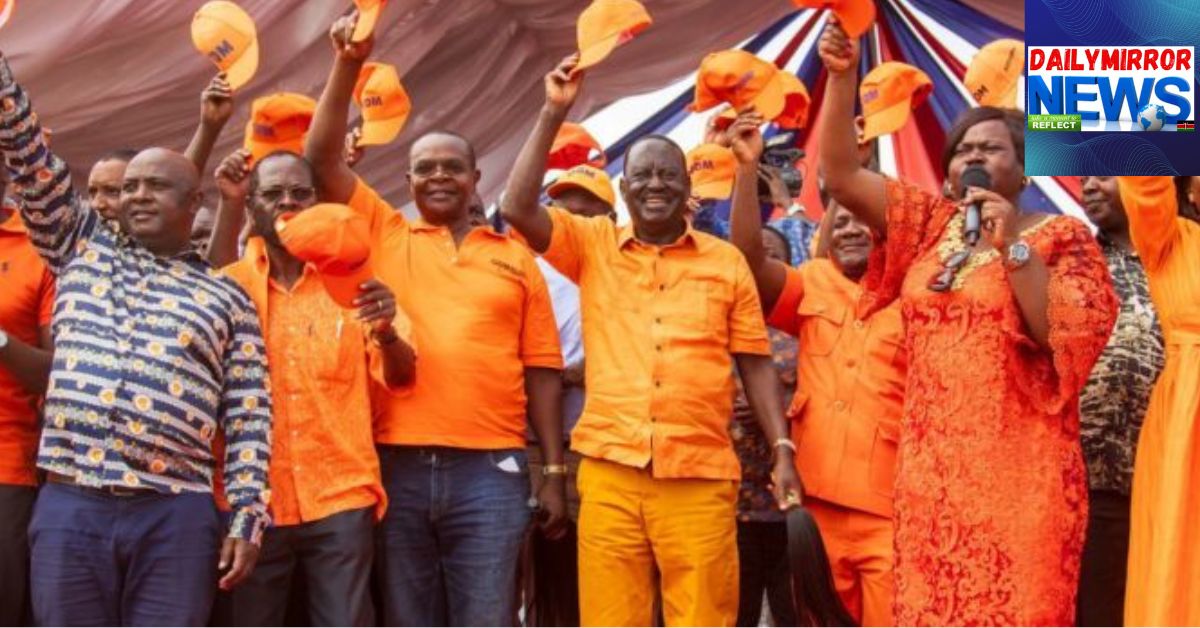
Speaking during a rally in Dandora on Sunday, February 1, ODM national chairperson Gladys Wanga said the party had resolved to pursue a 50–50 power-sharing formula in any pre-election coalition talks with UDA. She said the position had been unanimously agreed upon within ODM and would guide all negotiations going forward.

“We have agreed as a party to send our leader, Oburu Odinga, to negotiate with President William Ruto so that they enter into an agreement—ODM to take half, and UDA half,” Wanga told the crowd, drawing cheers from supporters.
Wanga said the demand for parity was meant to ensure fairness, balance, and mutual respect in decision-making, insisting that ODM would not accept a subordinate role in any political arrangement. She maintained that ODM remains the most established and nationally rooted party in the country and therefore deserves equal footing.
“ODM is not a small party. We are the senior-most party in Kenya, and we will only sit at the table as equals,” she said.
Beyond power-sharing, Wanga outlined additional preconditions that must be met before ODM commits to any coalition. She said full implementation of the party’s 10-point agenda and the recommendations of the National Dialogue Committee (NADCO) report would be non-negotiable. These include compensation for victims of post-election protests and broader reforms aimed at national cohesion.
The ODM chairperson also dismissed claims that unnamed individuals were attempting to negotiate political deals on behalf of the party without its mandate.

“Nobody is auctioning ODM. As long as I am the national chairperson, this party is not for sale,” Wanga said, warning against what she described as backdoor negotiations.
Her remarks come amid growing political realignments as parties position themselves ahead of the 2027 polls. ODM leaders have in recent weeks intensified public engagements, consistently emphasising that the party must be treated with respect in any future alliances.
At a rally in Kakamega on January 18, ODM party leader Oburu Odinga echoed Wanga’s sentiments, insisting that the party would only negotiate from a position of strength.
“I want to assure you that with your support, as we continue to negotiate with others, we will make sure that ODM, being the largest party in Kenya, gets its fair share of government,” Oburu said.
ODM leaders have argued that the current broad-based arrangement, which saw the party secure four Cabinet slots, fell short of reflecting its political strength and national support. They say future agreements must go beyond symbolic inclusion and deliver substantive representation in government.

Political analysts note that ODM’s insistence on a 50–50 deal mirrors past coalition arrangements in Kenya’s political history. In the run-up to the 2013 General Election, then-Deputy Prime Minister William Ruto’s United Republican Party (URP) and former President Uhuru Kenyatta’s The National Alliance (TNA) entered into an equal power-sharing agreement that distributed Cabinet positions, principal secretary slots, and parastatal leadership roles evenly.
Whether ODM and UDA can agree on similar terms remains uncertain, but Wanga’s declaration signals tough negotiations ahead. As the 2027 election cycle gathers momentum, the question of coalition arithmetic and power balance is expected to dominate Kenya’s political discourse.
ALSO READ: Countries on Alert as WHO Confirms Nipah Virus Outbreak in India
Gladys Wanga Insists ODM Will Only Join Coalition With Equal Power Split
