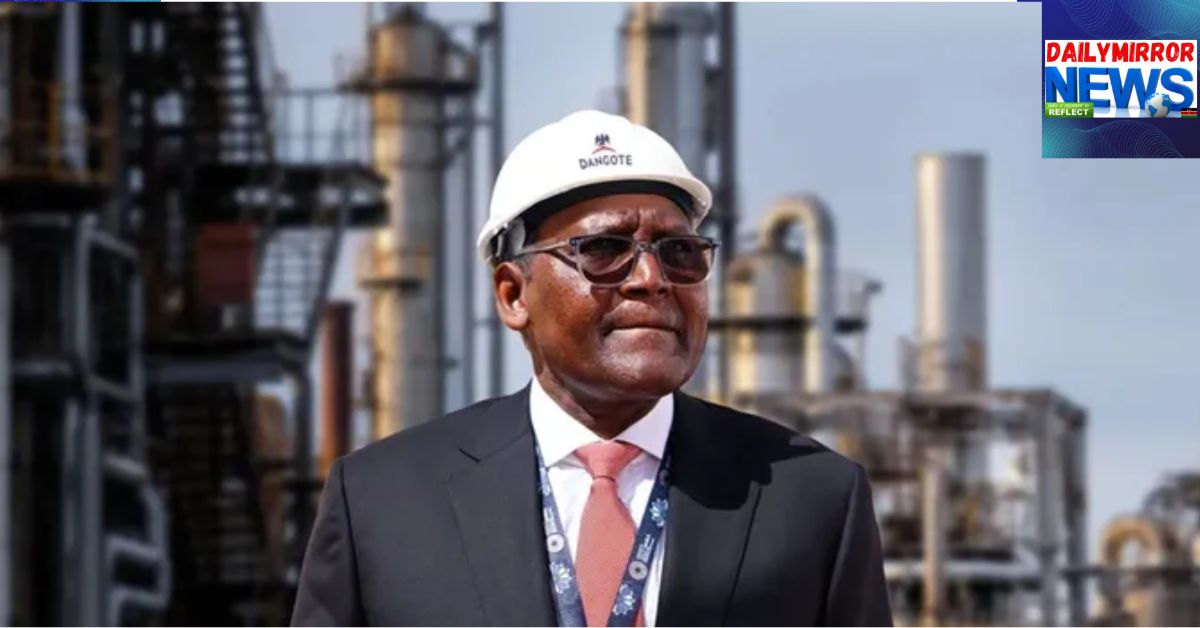
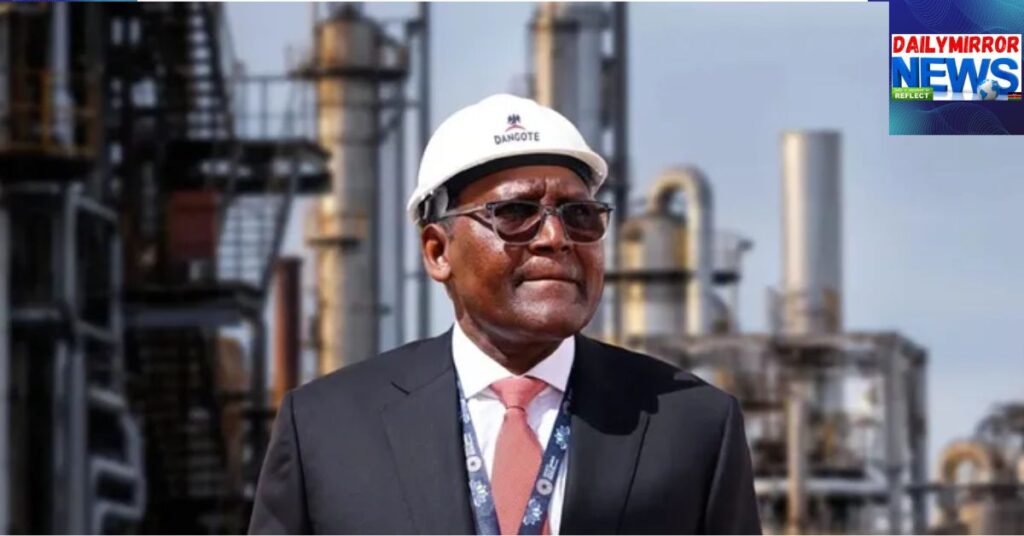
Dangote made the announcement on Friday, September 25, during President William Ruto’s tour of the Dangote Petroleum Refinery in Lekki, Lagos. The disclosure adds an electricity-generation component to the proposed multibillion-shilling Lamu refinery project.
“We are going to produce about 1,000 megawatts in Lamu and have 500 megawatts to sell to the Kenyan government,” Dangote said.
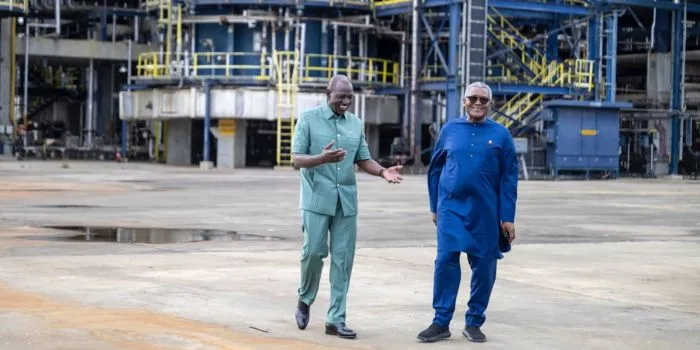
President William Ruto (left) talking to Billionaire Aliko Dangote during their visit to the Dangote Petroleum Refinery and Petrochemical Company in Lekki, Nigeria, on Friday, September 25, 2026.
The proposed power plant is expected to support the refinery’s industrial operations while creating the possibility of additional electricity being supplied to the Kenyan market.
Dangote also described the refinery as a starting point for wider investment in Kenya, suggesting that the development could attract additional industries around the facility.
“What this investment will do to Kenya’s economy is not only the refinery. The refinery is actually the gate. Once you open the refinery, you will be shocked at how many people will come to invest in Kenya.”
President Ruto has described the project as more than a refinery, saying it will form part of Kenya’s wider industrialisation plans.
“We are not looking at this as just a refinery. We are looking at it as a refinery that is also going to elevate our industrial scale. We have already secured the land for this project,” Ruto said.
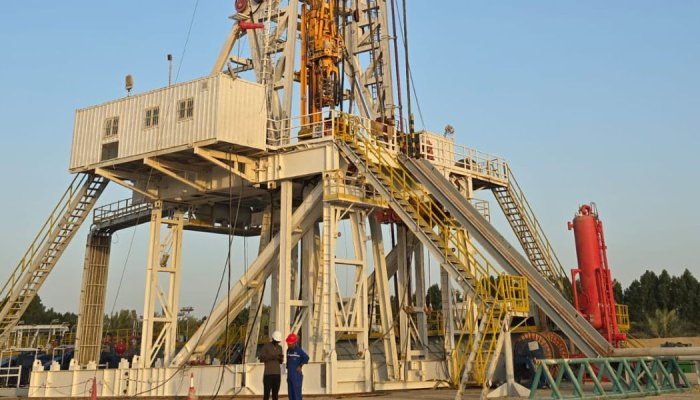
A GW70 onshore drilling machine worth Ksh1.9 billion from the United Arab Emirates (UAE) for the South Lokichar Basin.
The President’s visit to the Lagos refinery came days before the planned groundbreaking of the East Africa Refinery in Lamu on September 30. Ruto has said the Kenyan facility will be comparable in scale to the Nigerian refinery and could create more than 60,000 jobs.
The proposed electricity plant would add another major component to the development, potentially linking fuel refining, power generation and industrial activity at the Lamu site.
However, the electricity sales proposal would still require agreements covering power generation, fuel supply, transmission and the purchase of electricity by the Kenyan government. Earlier reports indicated that LNG for the proposed plant could be sourced from Tanzania, with options including a pipeline or shipment by sea.