


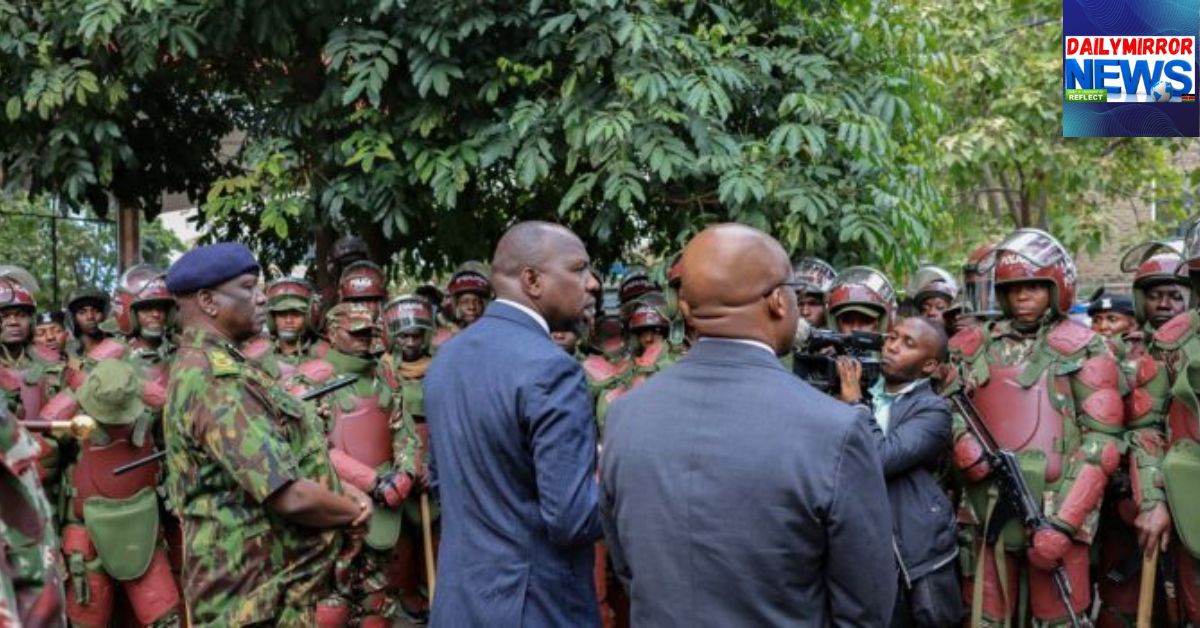
Murkomen Orders Police to Exercise Restraint, Outlines Instances Authorities Can Use Force & Firearms
Interior Cabinet Secretary Kipchumba Murkomen has fired a strong warning to police officers: “Use bullets only when absolutely necessary.”
In his newly released Policy Directive No.1 of 2025, Murkomen called on all officers to uphold human life and dignity—even during riots.
“Force and firearms shall only be used when there’s an imminent threat to life or serious injury,” the CS declared.
This directive comes amid nationwide anger following controversial presidential remarks that allowed officers to shoot violent protesters in the leg. Just weeks earlier, Murkomen himself had come under fire for a “shoot-to-kill” instruction targeting those storming police stations.
But now, the tone has changed.
“Non-violent means must be exhausted first before using any force,” he stressed.

Clear Conditions for Firearm Use
Murkomen outlined strict conditions under which officers may discharge firearms during protests. They must first determine that:
- The person poses a life-threatening risk.
- No other method can prevent harm.
- The danger is real and imminent.
Even then, restraint must guide every action.
“The use of force must be lawful, proportionate, and reasonable to achieve a legitimate law enforcement objective,” he emphasized.

Four Golden Rules for Officers
In unavoidable scenarios, Murkomen laid down four crucial rules:
- Use force in proportion to the seriousness of the threat.
- Minimize injury and respect human life.
- Provide medical help to the injured immediately.
- Report the incident promptly to the Independent Policing Oversight Authority (IPOA).
“Force must never become extrajudicial punishment,” Murkomen warned.
He also made it clear that “no additional force is lawful once a suspect is safely detained.”
A Call for Reform and Responsibility
To reinforce this shift, Murkomen ordered the National Police Service (NPS) to review its training manuals, operations, and tactical response strategies. He urged officers to internalize accountability and build public trust.
“We must foster a culture of responsibility,” he added, admitting the complexity of operational policing.
This bold directive aims to prevent further bloodshed in Kenya’s streets and to realign policing with the rule of law. Many Kenyans, still mourning lives lost in recent protests, are demanding swift implementation.
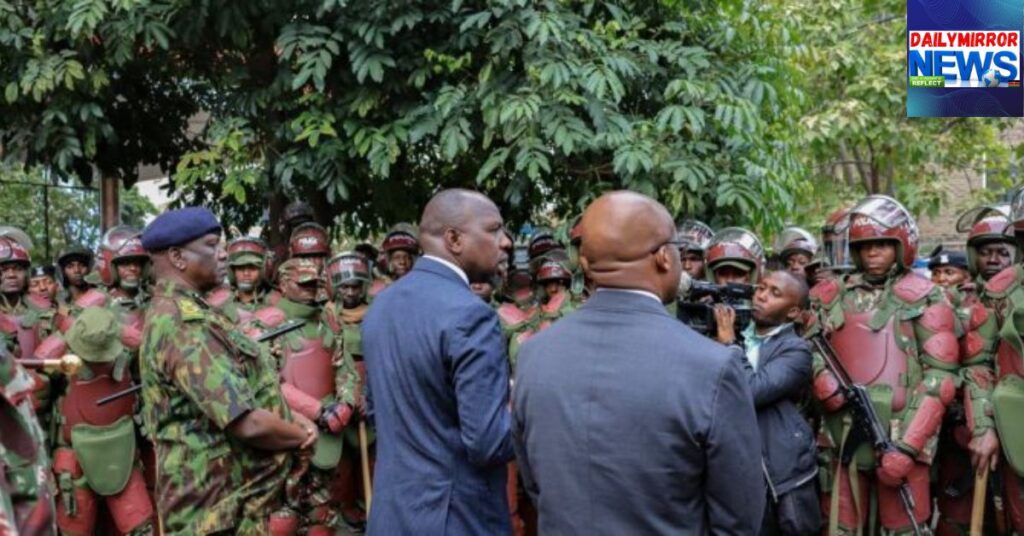
Whether this directive marks a new era of justice or remains another policy on paper—time will tell.
ALSO READ: WETANG’ULA LASHES OUT AT GACHAGUA OVER TRIBAL POLITICS IN US
Murkomen Orders Police to Exercise Restraint, Outlines Instances Authorities Can Use Force & Firearms
