



High Court Summons CS Duale Over Alleged Contempt in Laikipia Ebola Facility Case
The summons, issued by Justice Patricia Nyaundi, marks a significant development in a case that has sparked intense legal, environmental, and public debate over the establishment of the United States-backed health facility in Laikipia County.
The court directed CS Duale to appear on June 23 to explain why construction activities on the project allegedly continued despite existing court orders that restricted further implementation pending legal review.

The case was brought before the court by Katiba Institute, which filed a contempt application accusing government agencies of ignoring judicial directives and proceeding with the project without fully complying with constitutional and environmental requirements.
“The Court has summoned CS Duale to appear and explain the failure to comply with previous court orders regarding the proposed Ebola quarantine facility,” the institute stated.
According to court documents, the government had disclosed several records relating to the project. However, concerns emerged after the court noted that key documents, including environmental and social impact assessments as well as safety contingency plans, were either incomplete or unavailable within the disclosed material.
The court observed that such documents are critical for a project of this nature, particularly one involving a high-risk infectious disease preparedness facility.
Project at the Centre of Controversy
The project is reportedly valued at approximately Ksh1.75 billion and forms part of a larger East Africa health assistance package designed to improve disease surveillance, emergency response capabilities, and quarantine infrastructure.
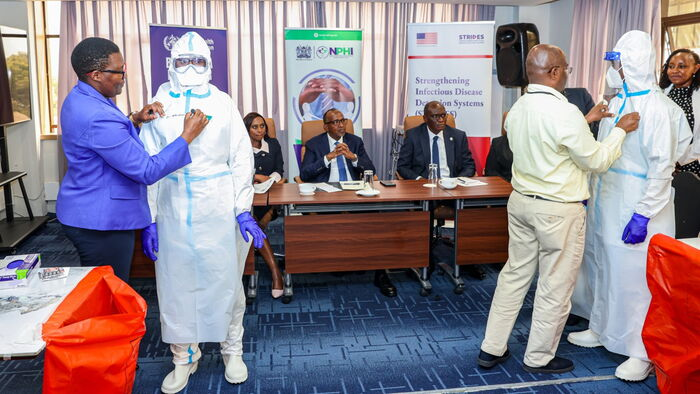
Government officials have previously defended the project, arguing that it is intended to enhance Kenya’s preparedness against potential disease outbreaks in the region rather than respond to any active Ebola threat within the country.
Speaking in previous public engagements, government representatives emphasized that strengthening health infrastructure remains a key priority as neighboring countries continue to monitor emerging disease threats.
Questions Over Compliance
Despite those assurances, opponents of the project argue that the government’s approach has raised serious legal and constitutional concerns.
They further argue that proceeding with construction while court orders remain in force could undermine judicial authority and set a dangerous precedent for future government projects.
“Court orders are not suggestions. They are binding directives that must be obeyed by all parties regardless of their position,” legal analysts observed following the ruling.
The contempt proceedings are therefore expected to focus not only on the project itself but also on whether government agencies respected the authority of the court.
National Interest and Public Scrutiny
Legal experts note that the outcome could have far-reaching implications for how future government-funded and donor-backed projects are implemented.

With CS Duale now required to personally answer questions before the court, attention will shift to the upcoming hearing, where the government is expected to provide explanations regarding compliance with previous directives.

ALSO READ: ODM Removes Edwin Sifuna as Secretary General Amid Deepening Party Rift
High Court Summons CS Duale Over Alleged Contempt in Laikipia Ebola Facility Case
