


Parliament Invites Public Comments on Supplementary Budget That Doubles State House Spending
In a public notice issued on Friday, March 13, the Assembly’s Budget and Appropriations Committee called on citizens, civil society groups, and other stakeholders to present memoranda on Supplementary Estimates No. 1 for the 2025/2026 financial year.
The notice, signed by Clerk of the National Assembly Samuel Njoroge, stated that submissions must be received by Thursday, March 19, at 5:00 p.m., either physically at Parliament Buildings in Nairobi or via official email channels.
Of the additional funds requested, approximately KSh185.8 billion has already been spent under emergency provisions and now requires retroactive approval by Parliament, as stipulated under Article 223 of the Constitution.
Under Article 223(5), emergency expenditure must not surpass 10 percent of the total appropriated budget unless Parliament expressly authorizes a higher amount under exceptional circumstances.
The Ministry of Defence emerges as the single largest beneficiary, receiving an additional KSh24.4 billion on top of its previously approved KSh202.3 billion allocation. Lawmakers have yet to receive detailed justification for the extra defence spending, a matter expected to draw scrutiny during parliamentary review.
The State Department for Agriculture is also among the major recipients, securing KSh19 billion for fertilizer subsidies and reforms in the sugar sector, alongside KSh2.92 billion earmarked for seed subsidies and crop diversification initiatives.
Additional allocations include KSh12.6 billion for disaster mitigation programs targeting droughts and floods, KSh8.31 billion for a COVID-19 emergency health response project, and KSh5.62 billion to support the primary health care fund.
Security operations will receive a boost through a KSh7.5 billion allocation to the National Police Service, while KSh5.5 billion has been set aside to address salary shortfalls for medical interns.
Other notable provisions include KSh4.4 billion for a nationwide outreach program by the immigration department to facilitate issuance of national identity cards and birth certificates, KSh3.1 billion to cover funding gaps for national examinations, and KSh2.97 billion for the NYOTA project targeting micro, small, and medium-sized enterprises.
The State Department for Cooperatives has also been allocated KSh2 billion to stabilize raw milk prices amid a glut in the dairy sector.
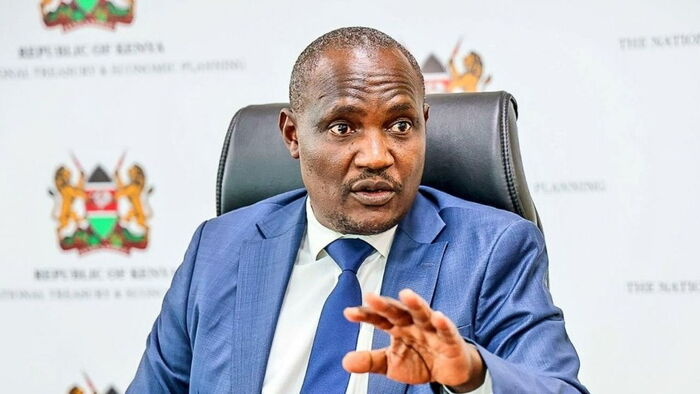
In his accompanying statement, CS Mbadi attributed the additional spending to emerging national priorities and funding shortfalls that arose after the original budget was enacted.
“The requests are intended to address critical expenditures and urgent priorities that could not be fully accommodated in the approved budget,” Mbadi explained.
Parliamentary officials emphasized that public participation is a constitutional requirement in budget-making processes and urged citizens to contribute views to ensure transparency and accountability.
“Kenyans are encouraged to submit their memoranda within the stipulated timelines to inform the committee’s deliberations,” the notice stated.
The committee is expected to review submissions before presenting its recommendations to the full House for debate and approval.

The outcome of the process will determine whether the government secures legal backing for the additional spending, which could reshape fiscal priorities for the remainder of the financial year amid mounting economic pressures and competing development needs.
ALSO READ: High Court Upholds Appointment of Noordin Haji as NIS Director
Parliament Invites Public Comments on Supplementary Budget That Doubles State House Spending
