



Wetang’ula Warns MPs Against Over-Summoning CSs, PSs and Senior Officials
National Assembly Speaker Moses Wetang’ula has cautioned Members of Parliament against what he described as the excessive and uncoordinated summoning of Cabinet Secretaries (CSs), Principal Secretaries (PSs), and senior government officials by parliamentary committees, warning that the practice risks undermining effective governance.
Speaking on Tuesday during the 2026 Legislative Retreat for Members of the National Assembly held in Nakuru, the Speaker said his office had received a growing number of complaints from senior Executive officials who feel overwhelmed by repeated committee summons on the same matters.
According to Wetang’ula, some officials have been required to appear before multiple committees—sometimes more than three—over identical issues, even after already responding to similar queries elsewhere in Parliament.

“My attention has been drawn to a peculiar and concerning trend that has been exhibited within our committees. Whenever there is a pending employment issue within public institutions, the heads of those institutions are usually invited to appear before multiple committees on the same matter,” Wetang’ula said.
He noted that the Inspector General of Police, Douglas Kanja, and Teachers Service Commission (TSC) Acting Chief Executive Officer Eveleen Mitei were among the most affected officials, having been summoned repeatedly by different committees.
While affirming Parliament’s constitutional mandate to exercise oversight over the Executive, Wetang’ula warned that the power must be applied responsibly to avoid creating perceptions of intimidation or causing administrative paralysis in government institutions.
“Oversight is not optional; it is a constitutional duty. However, it must be exercised in a manner that is orderly, coordinated, and fair, without creating the impression of undue pressure on public officers,” he said.
To address the issue, the Speaker directed Deputy Speaker Gladys Shollei and her liaison team to review the current committee practices and harmonise the process through which Executive officials are invited to appear before Parliament. He said the aim was to ensure efficiency, clarity of mandate, and respect for institutional boundaries.
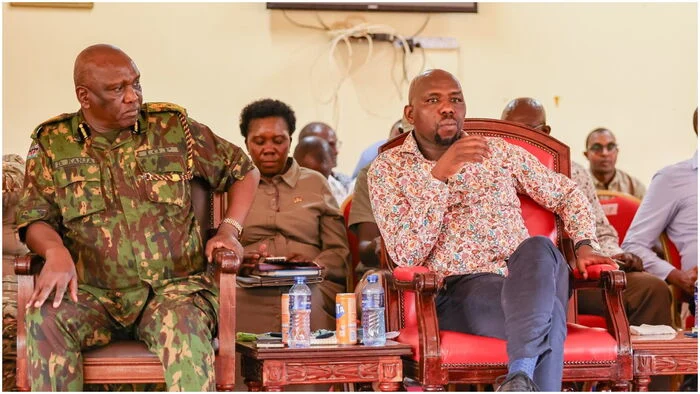
The Speaker’s remarks come against the backdrop of heightened tension between Parliament and the Executive, particularly following the Senate County Public Accounts Committee’s (CPAC) decision to summon Inspector General Douglas Kanja.
CPAC formally summoned the police chief over what it described as his failure to act on Parliament’s directive to apprehend Samburu Governor Lati Lelelit, who has repeatedly ignored the committee’s invitations to explain the management of billions of shillings allocated to the county during the 2023/24 financial year.
CPAC Chairperson Senator Moses Kajwang accused the Inspector General of undermining Parliament’s authority.
“The Inspector General of Police should appear before this Committee within the next seven days to explain why he is unwilling to implement the resolutions of Parliament,” Kajwang said.
“The police must understand that they do not operate under a different constitutional order. This Committee will not tolerate contempt of Parliament by the IGP or his failure to facilitate the work of Parliament,” he stated.
Governor Lelelit had failed to honour a CPAC summons scheduled for December 4, 2025, leading to a Ksh500,000 fine. On December 9, the committee instructed the police to locate, apprehend, and present the governor before Parliament by December 18.

The unfolding developments highlight the delicate balance between parliamentary oversight and executive autonomy, a tension that Speaker Wetang’ula warned must be carefully managed to safeguard institutional harmony and effective service delivery.
ALSO READ: Ruto Appoints 15 New Judges
Wetang’ula Warns MPs Against Over-Summoning CSs, PSs and Senior Officials
