



Ruto Unveils Plans for World Bank-Funded Class B Road Connecting Salgaa and Kilgoris
Speaking during a church service in Kilgoris, Narok County, the Head of State revealed that the proposed road—set to connect Kilgoris to Salgaa—will be financed through a loan arrangement with the World Bank.
“And then there is this road which you were promised by the first government of the republic, you were also promised by the second, third, and fourth governments, but never fulfilled,” Ruto said, referencing longstanding public expectations around the corridor.
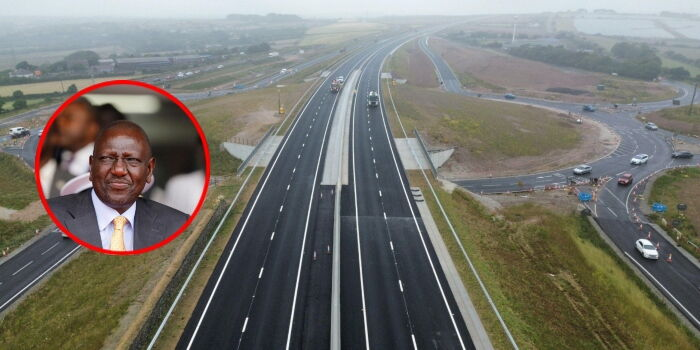
According to the President, the road will traverse several towns within Narok County—including Marua, Enkaka, Enosail, Kilgoris, and Cheptuka—before connecting to Salgaa in Nakuru County, a key junction along the country’s transport network.
He emphasised his personal commitment to delivering the project, noting that discussions with the World Bank had already taken place to secure funding.
“That road will go until Salgaa. I have already talked to the World Bank, and I will construct a Class B road… I know you have been deceived before, but I stand here to assure you that I will construct this road myself,” he stated.
A Class B road is classified as a national trunk road, typically linking major urban centres, county headquarters, and economic hubs. Such roads often connect to Class A international highways, forming part of Kenya’s broader strategic transport infrastructure. In this case, the Kilgoris–Salgaa route is expected to integrate with the Nairobi–Nakuru–Eldoret–Malaba highway, a key regional corridor supporting trade and mobility.
While the President did not provide a definitive construction timeline, sources within the Narok County government have indicated that groundwork could begin as early as July, pending finalisation of financing and design approvals.
The announcement comes amid ongoing government efforts to expand and modernise Kenya’s road network. President Ruto has previously pledged to oversee the tarmacking of up to 28,000 kilometres of roads nationwide during his tenure, a move aimed at improving accessibility and unlocking economic potential in underserved regions.
In recent months, the government has also pursued additional infrastructure financing, including negotiations with the World Bank to support the completion of the 750-kilometre Isiolo–Mandera highway. It remains unclear whether the Kilgoris–Salgaa project will be funded under the same financing framework or through a separate arrangement.
Other major projects currently underway include the Mau Summit–Rironi dual carriageway, designed to ease congestion along the busy Nairobi–Nakuru route, and the Nithi Bridge project in Tharaka Nithi County, aimed at improving road safety in a high-risk area.

Funding for several of these initiatives is expected to be drawn from the National Infrastructure Fund (NIF), a multi-trillion shilling facility intended to reduce reliance on external borrowing. However, the continued pursuit of international financing for new projects has raised questions among analysts about the fund’s role and sustainability in supporting Kenya’s infrastructure ambitions.
Despite these concerns, government officials maintain that strategic partnerships with global financiers remain essential in accelerating development.
As plans for the Kilgoris–Salgaa road take shape, attention will now turn to implementation timelines, funding structures, and the project’s potential impact on trade, transport, and regional integration within the South Rift and beyond.
ALSO READ: Farouk Kibet Goes after Uhuru Kenyatta again, Asks Him to Keep Off Politics
Ruto Unveils Plans for World Bank-Funded Class B Road Connecting Salgaa and Kilgoris
