



Ruto Approves Creation of Railway Development Levy Fund to Accelerate Securitisation
The fund will be created following the President’s assent to the Miscellaneous Fees and Levies (Amendment) Act, 2026, signed into law on Friday, March 13. Officials say the legislation expands the scope of the existing Railway Development Levy, allowing revenue collected from fuel sales to be channelled into a broader range of railway transport projects beyond the Standard Gauge Railway.
According to a statement issued by State House Kenya, the new framework is designed to ensure long-term, predictable funding for critical infrastructure while improving accountability in how levy proceeds are managed.
“The amended law supports the government’s policy objective of mobilising sustainable financing for strategic railway transport infrastructure while strengthening the institutional framework for the management and utilisation of the Railway Development Levy,” the statement said.
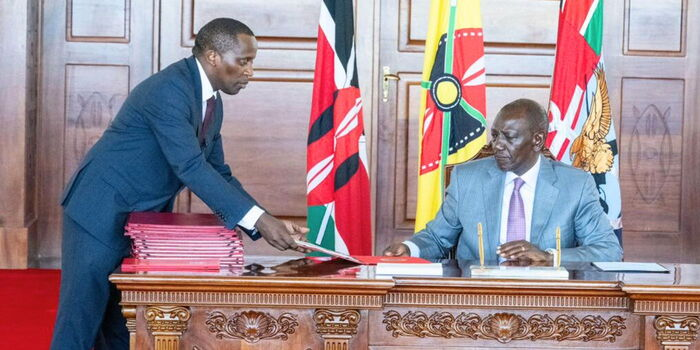
“The creation of the fund aims to ensure that the resources raised through the levy are properly managed and specifically utilised for the development of railway infrastructure,” the statement added.
Currently, motorists contribute to the levy through a charge embedded in fuel prices. In July 2024, the government increased the levy from KSh18 to KSh25 per litre of petrol and diesel, with KSh7 of that amount subsequently securitised by the National Treasury of Kenya to support borrowing for infrastructure projects.
Under the new law, proceeds from the levy will not only finance construction of new railway lines but may also be used for rehabilitation of aging rail systems, safety improvements, and economic regulation of railway operations.
However, any rehabilitation projects funded through the levy will require joint approval from both the Cabinet Secretary for the National Treasury and the Cabinet Secretary responsible for transport, introducing an additional layer of oversight.
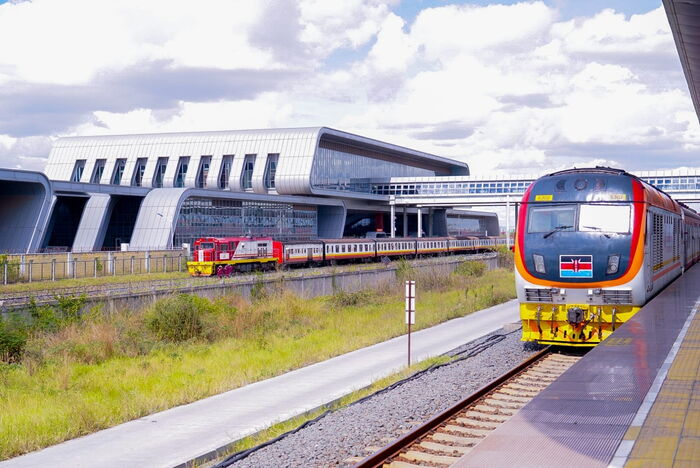
Government officials say the Railway Development Levy Fund will complement these efforts by providing a dedicated and sustainable funding stream for rail transport, which is considered essential for reducing logistics costs and boosting trade.
Earlier this year, authorities announced plans to securitise approximately KSh125 billion in short-term syndicated loans to finance ongoing road projects using revenues linked to the levy.
In addition, the government plans to list a KSh175 billion infrastructure bond on the Nairobi Securities Exchange to refinance existing bridge loans and support long-term capital investment.
Economic analysts say the strategy reflects a shift toward innovative financing mechanisms amid constrained public finances and rising debt levels.
Rail transport has been identified as a cornerstone of Kenya’s long-term development agenda, with officials highlighting its potential to ease road congestion, lower freight costs, and enhance regional connectivity.
The newly approved fund is expected to play a central role in future railway expansion plans, including upgrades to existing lines and development of new corridors linking industrial zones and ports.
As implementation begins, attention will turn to how effectively the government balances infrastructure ambitions with fiscal sustainability and public accountability.
ALSO READ: CS Kabogo Reveals 4 Upcoming Changes to TikTok
Ruto Approves Creation of Railway Development Levy Fund to Accelerate Securitisation
