



Key Govt Websites Hacked in Coordinated Cyberattack
According to reports, the attack targeted websites linked to major ministries and state agencies, including Health, Education, Labour, Environment, ICT, Tourism, Interior, and State House. The attackers defaced the sites by altering their visual appearance and embedding disturbing messages.
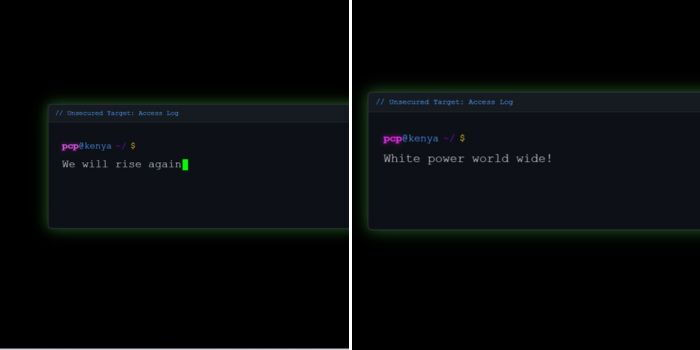
“Access denied by PCP,” “We will rise again,” “White power worldwide,” and “14:88 Heil Hitler” were among the slogans displayed on the compromised pages.
The numeric code “14:88” is widely recognized as a neo-Nazi reference, combining two white supremacist slogans. The presence of such messages has led cybersecurity analysts to suspect ideological motives behind the breach.
Services Disrupted
The cyberattack affected several high-profile platforms, including the Directorate of Criminal Investigations (DCI), the Directorate of Public-Private Partnerships, the Immigration Department, the Hustler Fund portal, and the Government Press. Nairobi County’s website was also taken offline.
At the time of publishing, no government agency had issued a formal statement regarding the breach, and no group had claimed responsibility.
Public Frustration and Operational Impact
The outage has frustrated thousands of Kenyans who rely on government websites for essential services and information. From passport applications to public health updates, the disruption has impacted both individual users and institutional operations.
A spot check revealed that some key platforms, including eCitizen, the National Transport and Safety Authority (NTSA), the Judiciary, the Kenya National Examinations Council (KNEC), and the National Police Service, remained operational.

Historical Context and Speculation
This is not the first time Kenya has faced a cyberattack targeting government infrastructure. In 2023, a Sudanese hacker group known as Sudan Anonymous claimed responsibility for a similar breach, citing Kenya’s alleged interference in Sudanese affairs. The group targeted eCitizen and other major portals, although it provided no concrete evidence to support its claims.
While the current attack bears no confirmed link to previous incidents, the recurrence of such breaches has prompted renewed calls for stronger cybersecurity protocols and inter-agency coordination.
Silence from Authorities
As of Monday afternoon, the Communications Authority of Kenya and the Ministry of ICT had not issued any public statements. The lack of immediate response has drawn criticism from digital rights advocates, who argue that transparency and swift communication are essential in managing public trust during cyber crises.
Conclusion
The coordinated cyberattack on Kenyan government websites has exposed vulnerabilities in the country’s digital infrastructure and disrupted access to vital services. With no group claiming responsibility and no official explanation provided, the incident has left citizens and cybersecurity experts demanding answers.

As investigations continue, the government faces mounting pressure to restore services, identify the perpetrators, and implement robust safeguards to prevent future breaches.
ALSO READ: Kenyan Serving in U.S. Army Arrested in Tanzania With Four Hand Grenades
Key Govt Websites Hacked in Coordinated Cyberattack
