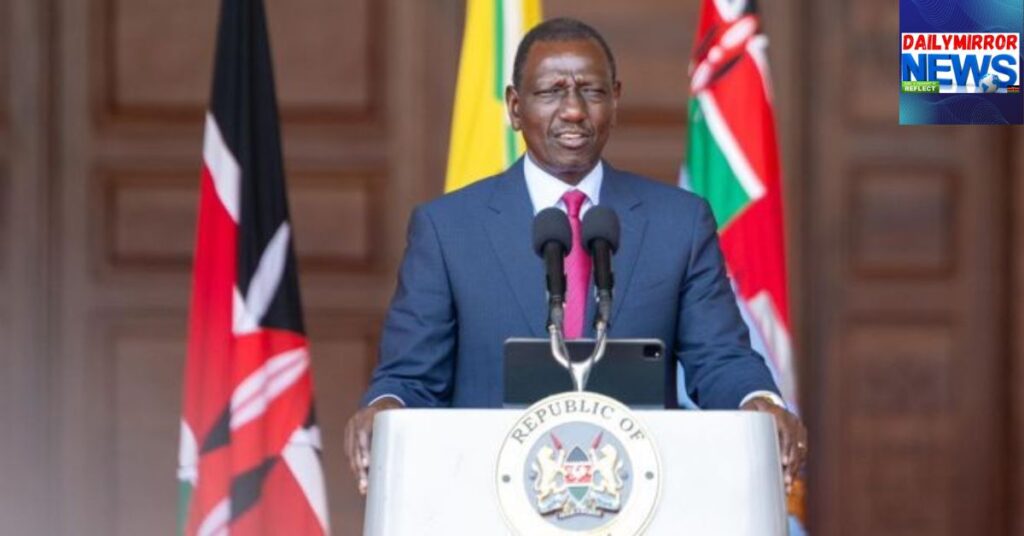
Just a day after President Ruto dared leaders opposed to his policies to quit, governors hit back strongly. On Monday, they accused the Treasury of sidelining counties in the rollout.
Wajir Governor Ahmed Abdullahi, chairperson of the Council of Governors, issued a fiery statement.
“It’s not that IFMIS has no problems, and it was there for the national government before. This is a system that has been piloted. He cannot do it through threats and intimidation and not solve the issues,” Abdullahi said.
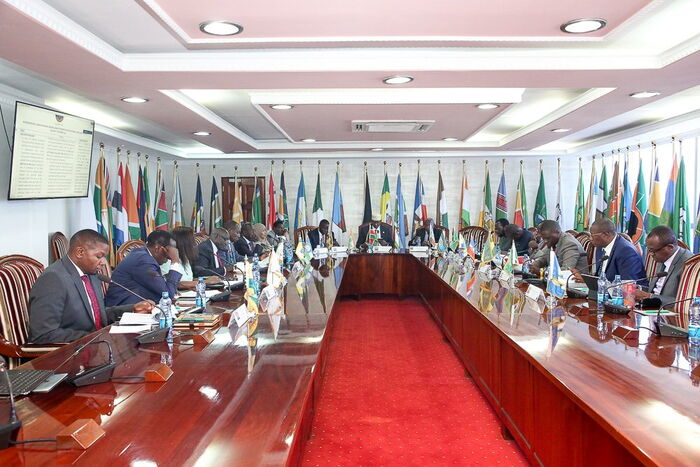
Wajir Governor Ahmed Abdullahi, who also serves as the chairperson of the Council of Governors, addressing the press after an extraordinary Council meeting in Nairobi on September 1, 2025.
“The roll-out was rushed, riddled with inconsistencies, and has disrupted service delivery in counties. Only three counties took part in the pilot, yet the system was imposed nationally without addressing the gaps identified,” the governors said.
They called on Treasury to stop issuing ultimatums. Instead, they want dialogue and proper piloting before the system is made mandatory.
They also claimed that the eGP system undermines counties’ constitutional independence.
“We therefore call on the National Treasury to immediately withdraw the Circular directing the counties to implement the e-GP until proper consultations, legal alignment, and capacity-building are undertaken,” the statement read.
Treasury’s Position
The Council of Governors, addressing the press after an extraordinary Council meeting in Nairobi on September 1, 2025.
Treasury, however, remains firm. During the June budget reading, CS Mbadi allocated Ksh700 million for the eGP system. The funds were meant to support the national rollout in the 2025/2026 financial year.
President Ruto has also thrown his weight behind the system, warning officials resisting reforms to either comply or step aside.