



Judiciary Clarifies Early Delivery of Court of Appeal Ruling on Presidential Advisors
In a statement released on Saturday, Judiciary Spokesperson Paul Ndemo said the court followed established procedures when issuing the ruling, dismissing claims of irregularities raised by some lawyers and sections of the media.
The dispute centres on a decision by the Court of Appeal of Kenya to grant a stay of execution on a High Court judgment that had ordered the dissolution of President William Ruto’s 21-member council of advisors.
According to Ndemo, the application for the stay was heard on February 23 by a three-judge bench. At the end of the proceedings, the judges indicated that the ruling would be delivered on April 24, 2026, or earlier if circumstances allowed.
“The bench informed parties that the ruling would be delivered on April 24, 2026, or earlier upon notice,” Ndemo said.
He explained that after reviewing the matter, the judges reached a decision sooner than expected and opted to release it ahead of schedule. On March 12, the Registrar of the Court of Appeal emailed counsel for all parties to notify them that the ruling would be delivered the following day via electronic communication.

“The ruling was subsequently transmitted to lawyers on record at 12:56 p.m. on March 13 using the same email addresses previously used for hearing notices and virtual participation links,” Ndemo stated.
The Judiciary noted that electronic delivery of court decisions has been standard practice since 2020, introduced to improve efficiency, transparency, and timely access to justice, particularly following disruptions caused by the COVID-19 pandemic.
“The use of electronic communication is consistent with established procedures adopted to enhance efficiency,” the statement added.
However, lawyers representing the petitioners strongly disputed the explanation. Advocate Joshua Malidzo, appearing for the Katiba Institute, claimed neither he nor his client received any notification regarding the hearing, the ruling date, or the decision itself.
“Unfortunately, the Judiciary has chosen to lie. I am the counsel on record. Let Hon. Ndemo produce the email thread showing that my client or I was served,” Malidzo said.
He further alleged that they only learned about the proceedings through informal channels.
“We only appeared during the hearing because a friend alerted us,” he added, insisting that the court record would confirm the lack of formal service.
The controversy intensified after the Katiba Institute said it first learned via social media that the appellate court had stayed the High Court decision—effectively granting the President a temporary reprieve.
Former Law Society of Kenya president Nelson Havi also weighed in, offering a pointed commentary on the situation.
“We have moved from ‘ruling not ready, to be delivered on notice’ to ‘ruling is ready, it cannot wait for the scheduled date,’” Havi said, adding sarcastically that the development demonstrated progress in expeditious disposal of cases.
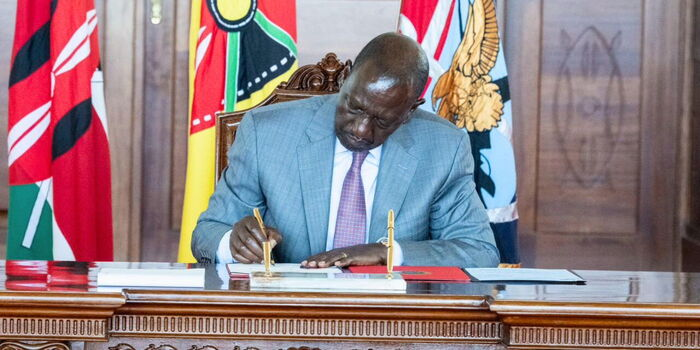
The underlying case concerns a High Court judgment that found the Office of Presidential Advisors unconstitutional, a decision with significant implications for executive operations. By suspending that ruling, the Court of Appeal has allowed the advisory structure to remain in place pending the determination of an appeal.

The Court of Appeal is expected to hear the substantive appeal in due course, a process that will ultimately determine the legality of the presidential advisory offices and potentially shape the balance of power between the executive and the judiciary.
ALSO READ: Ruto Reappoints Brown Ondengo to KCAA in 29 Fresh Appointments to Govt
Judiciary Clarifies Early Delivery of Court of Appeal Ruling on Presidential Advisors
