



Kenya Tourism Fund Upgrades eLevy Portal to Streamline Payments and Boost Compliance
In a statement released on March 3, the state agency urged hotels, restaurants, Airbnb operators and other hospitality businesses to promptly log into the improved system, update their details, and begin using the platform for filing returns and making payments.
“We are glad to inform you that we have upgraded the e-levy portal. Kindly log into the eLevy portal and proceed to update your details, file returns and make payments,” the Fund stated, emphasizing the importance of early adoption.
The upgraded portal introduces several user-friendly features, including automated levy calculations, improved record-keeping tools, and remote payment capabilities. Officials say the changes are designed to eliminate inefficiencies that previously forced business owners to visit government offices to complete transactions.
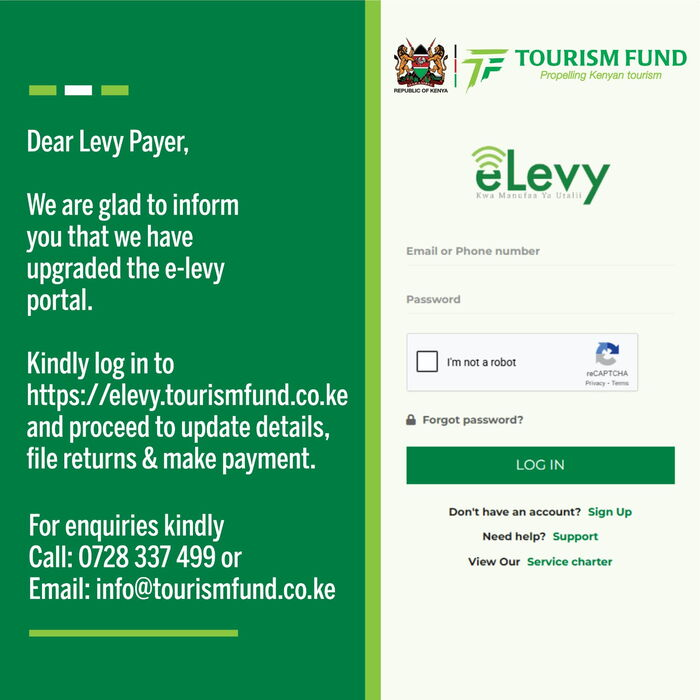
With the new system, hospitality operators can now manage their levy obligations entirely online, a shift that is expected to reduce delays and administrative burdens while improving transparency in revenue collection.
The Tourism Levy, set at 2 per cent of gross sales from accommodation and food services, applies broadly across the sector. Businesses affected include hotels, restaurants, short-term rental providers such as Airbnbs, and online booking platforms operating within Kenya.
All establishments regulated under the Hotels and Restaurants Act are legally required to remit the levy, with a strict monthly deadline. Payments must be submitted by the 10th day of the following month, failing which penalties are imposed.
Defaulters risk a fine of KSh5,000 or 3 per cent of the outstanding amount—whichever is higher—making timely compliance a financial imperative for operators in the sector.
According to the Tourism Fund, the system upgrade is part of broader government efforts to streamline tax administration and widen the revenue base, particularly within sectors that have historically faced compliance challenges.
The reforms align with ongoing initiatives by the Kenya Revenue Authority (KRA) under the Kenya Kwanza administration, which has been rolling out digital tax systems and introducing new measures targeting both formal and informal businesses.
Among the recent changes is the introduction of a 5 per cent withholding tax on digital content creators, which took effect in January 2026. The tax targets income earned through online platforms, including advertising revenue, sponsorship deals, affiliate marketing, and subscription-based services on platforms such as Facebook.
In addition, the government replaced the 1.5 per cent Digital Services Tax with a Significant Economic Presence tax, imposing a 3 per cent levy on the gross turnover of non-resident digital platforms serving Kenyan users. Companies affected by this policy include global firms such as Netflix, Amazon, Uber, and Airbnb.

Analysts say the integration of digital systems like the eLevy portal signals a shift toward more efficient tax administration, reducing loopholes and improving accountability in revenue collection.
The Tourism Fund has encouraged businesses that are not yet registered on the platform to create accounts promptly to avoid disruptions. It also assured stakeholders of continued technical support, providing contact channels for users experiencing difficulties with the system.
As Kenya continues to position tourism as a key economic driver, authorities say such digital upgrades will play a critical role in ensuring sustainable sector growth, improved compliance, and enhanced service delivery for both businesses and regulators.

ALSO READ: Sudan Accuses Ethiopia of Drone Attacks, Warns of ‘Consequences’
Kenya Tourism Fund Upgrades eLevy Portal to Streamline Payments and Boost Compliance
