



IEBC Registers Over 2.3 Million New Voters, Rules Out 30 Day Extension
The month-long exercise, which ran from March 30 to April 28, saw a total of 2,345,476 new voters added to the national register, according to IEBC Chairperson Erastus Ethekon. While the figure fell slightly short of the commission’s 2.5 million target, officials have described the outcome as a major success compared to previous registration drives.
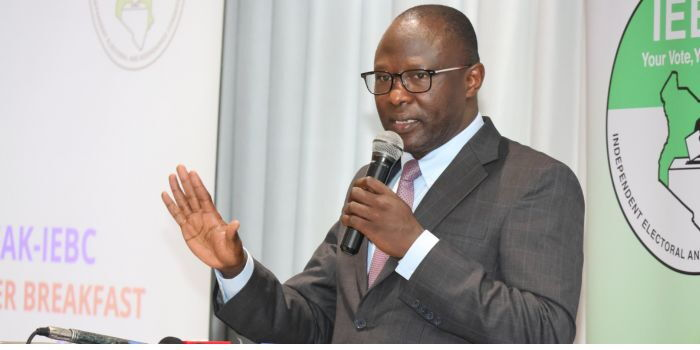
Announcing the results, Ethekon stated that “within the window of 30 days of the mass voter registration, we managed to capture and register 2,345,476 new voters. This is a major milestone for us.” He further commended Kenyans for their participation, noting that public cooperation played a key role in achieving the results.
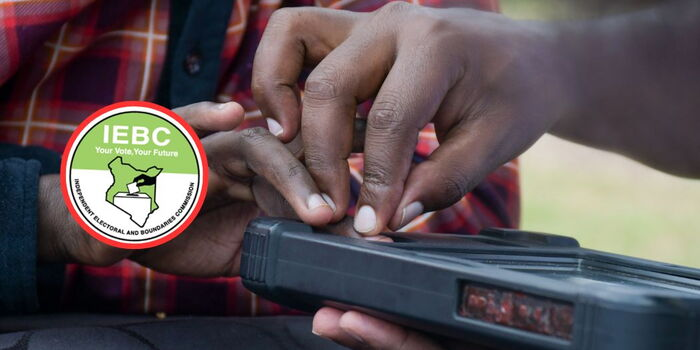
On average, the commission registered more than 500,000 voters per week, a significant improvement from past exercises. For comparison, during the 2016 mass voter registration, IEBC managed 1.4 million registrations within a similar timeframe, well below its 4 million target. A subsequent exercise in 2021 also recorded lower-than-expected turnout.
This flexibility removed long-standing geographical barriers that had previously discouraged participation, particularly among urban workers and students living away from their registered home areas. IEBC officials say the change significantly boosted accessibility and convenience.
The commission also expanded its registration network beyond traditional ward-based centres. Registration points were set up in universities, Technical and Vocational Education and Training (TVET) institutions, and other colleges, targeting young people and first-time voters.
This expansion aligned with the nationwide “Tuko Kadi” mobilisation campaign, which encouraged youth participation in the democratic process. IEBC noted that the strategy played a crucial role in capturing a large segment of newly eligible voters across the country.
Additionally, the commission adopted enhanced data-driven approaches, including the use of national identification datasets and real-time performance monitoring systems. Weekly updates enabled officials to track progress accurately and make timely adjustments during the exercise.
Unlike previous registration efforts that relied heavily on static census projections, the real-time data approach allowed for more responsive planning and execution. IEBC says this shift contributed significantly to the overall efficiency and transparency of the process.
Despite the positive outcome, the commission has firmly ruled out extending the registration period beyond the initial 30-day window. Addressing speculation about a possible extension, Ethekon clarified that “the exercise will not be extended beyond the stipulated timeline.”

However, he reassured Kenyans that voter registration has not come to a halt. Continuous registration remains available at Huduma Centres and IEBC constituency offices across the country, providing an ongoing opportunity for eligible citizens to enlist.
The announcement comes as Kenya gradually prepares for the 2027 General Election, with voter registration seen as a critical pillar in strengthening democratic participation. Analysts note that the addition of over 2.3 million voters could significantly influence future electoral dynamics, particularly given the strong turnout among young voters.
As IEBC shifts focus to maintaining and auditing the voter register, attention will now turn to ensuring accuracy, transparency, and inclusivity in the electoral process. For now, the commission is banking on the momentum generated by the ECVR exercise to sustain civic engagement in the lead-up to the next polls.

ALSO READ: Trade Ministry Lowers Fuel Quality Standards for 6 Months Over Supply Crisis
IEBC Registers Over 2.3 Million New Voters, Rules Out 30 Day Extension
