


U.S. Suspends Ksh200 Billion Health Deal With Kenya Pending Court Ruling
The United States government has announced that it will not proceed with the implementation of the $1.6 billion (approximately Ksh207 billion) Health Cooperation Framework with Kenya until the High Court makes a final determination on the matter.
Speaking during a press briefing in Nyeri on Thursday, December 12, U.S. Embassy Chargé d’Affaires Susan Burns said the American administration would respect the ongoing judicial process in Kenya before advancing the multi-billion-shilling agreement.
“It is up to Kenya to decide how they want this funding and how they want it implemented. These are discussions that we need to have with the government, but at the moment, the matter is for the court to decide,” Burns stated.
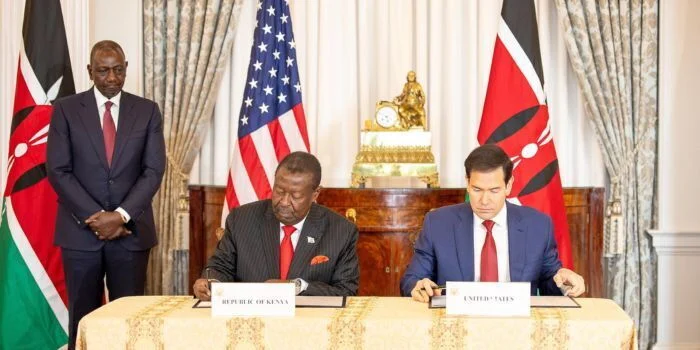
The agreement, signed on December 4, 2025, by Prime Cabinet Secretary Musalia Mudavadi and U.S. Secretary of State Marco Rubio, was witnessed by President William Ruto and was projected to significantly transform Kenya’s healthcare sector over a five-year period.
The deal aimed to strengthen digitisation of health systems, improve emergency preparedness, enhance workforce training, and streamline supply chain management. Funding was to be disbursed in phases directly through Kenyan government institutions.
However, just a week after the signing ceremony, the High Court issued conservatory orders suspending the implementation of the framework.
Justice Bahati Mwamuye halted the agreement, citing concerns over provisions relating to the transfer and sharing of medical and personal health data, which had sparked public debate and legal challenges.
In his ruling, the judge declared: “A conservatory order is hereby issued suspending, staying, and restraining the respondents, whether by themselves, their agents, or assigns, from implementing or giving effect to the Health Cooperation Framework executed between the Government of Kenya and the Government of the United States of America.”
He further clarified: “This suspension applies insofar as the agreement provides for or facilitates the transfer, sharing, or dissemination of medical, epidemiological, or sensitive personal health data.”
The court’s intervention followed petitions filed by civil society groups and activists who raised concerns about data protection, privacy rights, and national sovereignty. Critics argued that any transfer of sensitive health data to foreign entities must comply strictly with Kenya’s Data Protection Act and constitutional safeguards.
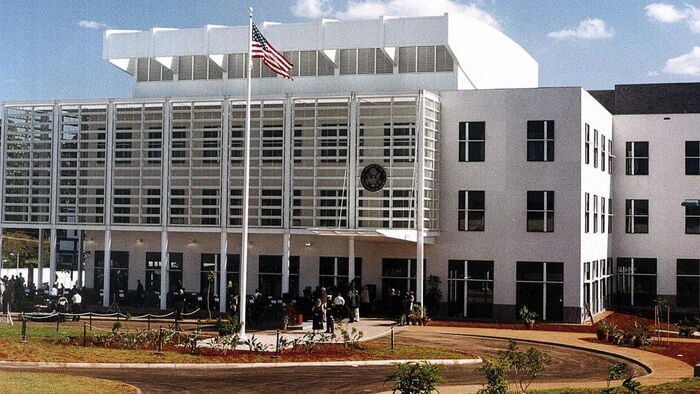
“We have a lot of work to do in the implementation, and we will continue to have this conversation with the government, of course, respecting any decision that comes from the court. There is a chance to relearn how to do things and scale them up,” she added.
Despite the temporary suspension of the framework, Burns reassured Kenyans that U.S. support for the country’s healthcare sector would continue through alternative channels. These include ongoing programs funded by the U.S. Embassy’s Office of Foreign Assistance and the Centers for Disease Control and Prevention (CDC).
Analysts say the development underscores the increasing scrutiny surrounding international cooperation agreements, particularly those involving digital infrastructure and data management. The case also highlights the growing role of Kenya’s judiciary in reviewing executive decisions tied to large-scale international partnerships.
As the High Court prepares to hear substantive arguments, stakeholders within the health sector are closely monitoring the outcome, given the agreement’s potential to modernize service delivery and expand access to quality care.
For now, both governments appear committed to dialogue while awaiting judicial direction, with the future of the Ksh200 billion framework resting squarely in the hands of the court.
ALSO READ: SHA Reveals Why They Cannot Pay for Overseas Treatment Yet
U.S. Suspends Ksh200 Billion Health Deal With Kenya Pending Court Ruling
