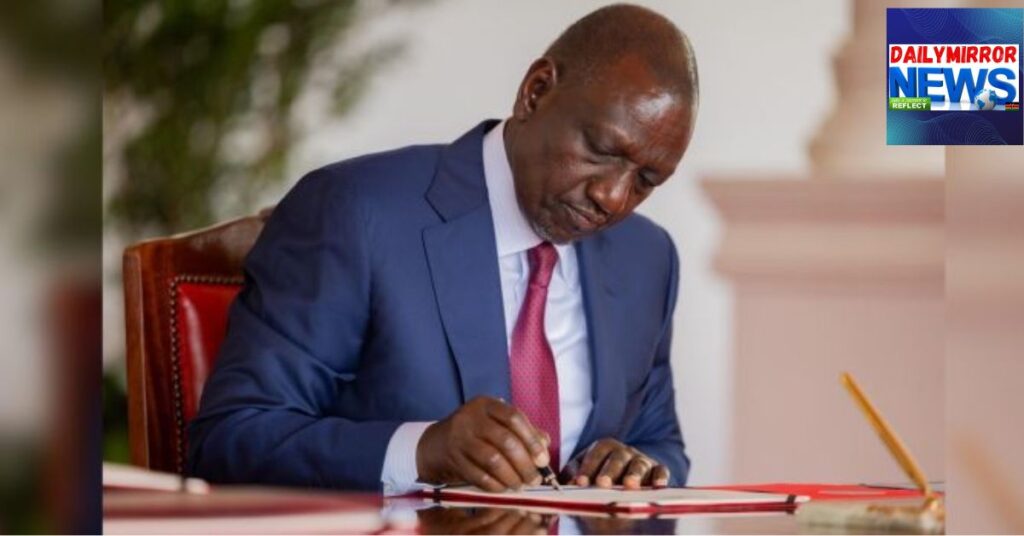
President William Ruto with National Assembly Clerk Samuel Njoroge, during the signing of the Computer Misuse and Cybercrimes (Amendment) Act, 2024, at State House, Nairobi, October 15, 2025.
Justice Edward Muriithi ruled in favor of Kirinyaga Woman Representative Jane Njeri Maina’s petition. He suspended Section 6(1)(a) of the law for seven days.
President William Ruto with National Assembly Clerk Samuel Njoroge, during the signing of the Computer Misuse and Cybercrimes (Amendment) Act, 2024, at State House, Nairobi, October 15, 2025. PCS
“It is hereby ordered that the application seeking conservatory orders pending hearing of a petition for a declaration that the enactment of the Computer Misuse and Cybercrimes (Amendment) Act, 2025 without the involvement of the Senate… was unconstitutional, null and void,” the judge stated.
“The application is certified urgent in view of the reliefs sought.”
“Pending the inter partes hearing, a conservatory order is issued suspending enforcement of Section 6(1)(a),” Justice Muriithi reiterated.
The court directed that the petition be served to the State Law Office, National Assembly, and other respondents before the next mention on November 3.
“Digital Freedom at Risk” — KHRC and Kigame Join the Fight
Musician Reuben Kigame and the Kenya Human Rights Commission (KHRC) also filed a petition challenging the law. They argue that the amendments will severely curtail digital rights.
“This law expands computer misuse to include vague offenses. It threatens online expression,” KHRC stated.
President William Ruto signed the Act into law on October 15, despite widespread resistance. Many Kenyans believe the law was rushed and lacks public consultation.
“We need laws that protect, not silence,” a protester said.
President William Ruto during the signing of the Anti-Money Laundering and Combating of Terrorism Financing Laws (Amendment) Bill, 2025 at State House, Nairobi on June 17, 2025. P
“This ruling gives us hope. We must defend our freedoms,” another added.